Within Testing
The Comparison That Makes a Review Useful
Side-by-side comparisons help readers decide whether the cheaper model, premium upgrade, older version, or rival product is the better choice.
On this page
- Which alternatives belong in a first hand affiliate review
- How to compare trade offs without copying spec sheets
- When an older, cheaper, or simpler product wins
Page outline Jump by section
Introduction
A first-hand affiliate review becomes genuinely useful when it helps readers choose between the product you tested and the other options they are already considering. Most buyers are not deciding whether to buy a single product in isolation. They are weighing a cheaper version, a premium upgrade, an older model, or a competing brand. A review that ignores those alternatives forces readers to leave your site to find the missing comparison.
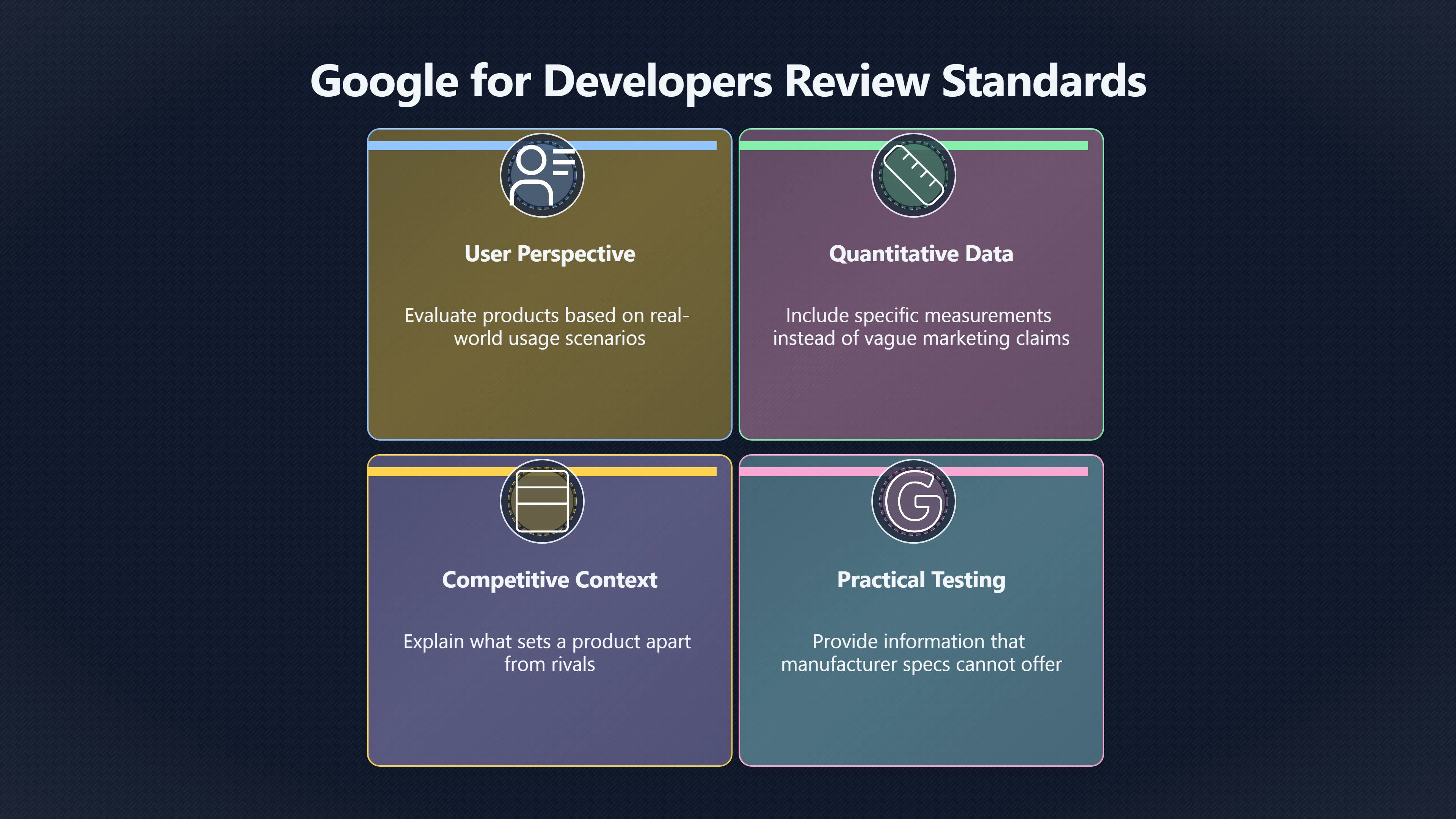
 This is also where original testing creates the greatest value. Google explicitly encourages reviewers to explain what sets a product apart from competitors, include quantitative measurements where possible, and evaluate products from a user’s perspective rather than repeating marketing claims. A comparison based on your own testing provides information that manufacturer specifications cannot, helping readers make a confident decision while increasing the credibility of an affiliate website.[Google for Developers]google.comfor Developers Write high quality reviews Write high quality reviews · Evaluate from a user's perspective. · Demonstrate that you are knoGoogle for DevelopersWrite high quality reviewsWrite high quality reviews · Evaluate from a user's perspective. · Demonstrate that you ar…
Which alternatives belong in a first-hand affiliate review?
Not every competing product deserves space in a review. The best comparisons reflect the options that real buyers actually shortlist before purchasing.
A useful affiliate review normally compares the tested product against four realistic alternatives.
- The cheaper alternative. Readers often ask whether saving 20–40% means giving up meaningful performance or simply sacrificing premium extras they may never use.
- The premium upgrade. If spending more genuinely improves durability, speed, comfort or long-term value, explain exactly where the additional cost becomes worthwhile.
- The previous generation. Many discontinued or older models remain widely available second-hand or at discounted prices. Sometimes they deliver 90% of the performance for substantially less money.
- The direct competitor. This is usually the product appearing beside it in retailer comparison pages or discussed alongside it in buyer forums.
The alternatives should arise naturally from buyer intent rather than affiliate commission rates. If readers repeatedly compare Product A with Product B before buying, leaving out Product B weakens the usefulness of the review regardless of which product pays the higher commission.
The comparison that makes a review useful
The strongest comparison sections are built around experience rather than specification tables.
Manufacturer specifications often tell readers that two products both have similar battery capacities, identical motors or matching processor speeds. Testing reveals the differences that matter in practice.
For example, instead of comparing only published figures, compare observations such as:
Buying questionMore useful than the specificationWhich is quieter?Measured or observed operating noise during normal use.Which feels better built?Construction quality after several weeks of handling.Which is easier to learn?Time needed before a beginner becomes comfortable using it.Which travels better?Weight, packing convenience and real portability.Which saves time?Actual workflow improvements rather than advertised speeds.
Google’s guidance specifically recommends explaining what distinguishes a product from competing choices instead of simply listing technical features. Readers benefit most when they understand why differences matter during everyday use.[Google for Developers]google.comfor Developers Write high quality reviews Write high quality reviews · Evaluate from a user's perspective. · Demonstrate that you are knoGoogle for DevelopersWrite high quality reviewsWrite high quality reviews · Evaluate from a user's perspective. · Demonstrate that you ar…
How to compare trade-offs without copying spec sheets
The goal is not to prove that one product is objectively “best”. It is to explain who benefits from each option.
A practical comparison usually follows three steps.
First, identify the most important buying criteria for the intended audience. A commuter buying headphones values comfort and battery life differently from someone editing audio professionally. A beginner photographer evaluates a camera differently from an experienced enthusiast.
Second, report only differences you observed during testing. Instead of repeating that one laptop weighs 150 grams less, explain whether that difference became noticeable after carrying both through a working day.
Third, explain the consequence of each difference.
For example:
- Better battery life means fewer charging interruptions during travel.
- Higher weight makes long handheld sessions more tiring.
- Faster autofocus increases the number of successful action photographs.
- A more complicated interface slows beginners but offers greater control for experienced users.
This approach turns measurements into buying advice rather than leaving readers to interpret specifications themselves.
When an older, cheaper or simpler product wins
Affiliate publishers sometimes avoid recommending lower-priced products because commissions are smaller. That short-term incentive can reduce long-term trust.
There are many situations where an older or cheaper product is the stronger recommendation.
Older models
Technology products often receive annual updates that deliver incremental improvements rather than transformational ones. If testing shows that the previous generation performs almost identically for common tasks, readers benefit from knowing that a discounted older model represents better value.
Explain exactly what changed.
For example:
- noticeably longer battery life;
- improved repairability;
- higher display brightness outdoors;
- significantly faster processing;
- new compatibility features.
If those improvements are minor for most buyers, say so.
Budget models
A cheaper product often succeeds because it avoids unnecessary complexity.
For beginners, families or occasional users, paying substantially more for professional features may produce little practical benefit. If the budget option completes everyday tasks almost as effectively, recommending it demonstrates editorial independence rather than maximising affiliate income.
Simpler products
Additional features frequently introduce setup complexity, maintenance requirements or learning curves.
If your testing shows that the simpler product delivers a better overall experience for typical users, explain why simplicity becomes a strength rather than a limitation.
Readers remember honest recommendations that save them money. Those recommendations frequently generate repeat visitors who trust future buying advice.
Show where the premium product genuinely earns its price
Avoid assuming that expensive automatically means better value.
Instead, identify the point where additional spending changes the ownership experience.
Examples include:
- materials that withstand years of heavy use rather than months;
- significantly lower maintenance costs;
- measurable improvements in productivity;
- features required for professional work but unnecessary for casual users;
- longer software support or warranty coverage.
Conversely, explain when premium improvements become marginal.
Statements such as “the extra £250 buys slightly nicer materials but produces almost identical results in everyday use” are far more valuable than generic praise.
Balanced recommendations also align with regulatory expectations that endorsements reflect genuine opinions and that commercial relationships are disclosed clearly rather than influencing supposedly independent advice.[Federal Trade Commission]ftc.govFederal Trade Commission FTC's Endorsement Guides: What People Are AskingFederal Trade CommissionFTC's Endorsement Guides: What People Are AskingSeptember 7, 2017 — 29 Jun 2023 — Here are answers to some of the…

Make disagreements easy to understand
Comparisons become more persuasive when readers can see exactly how conclusions were reached.
Useful evidence includes:
- identical test conditions for each product;
- photographs of both products side by side;
- timing, measurements or repeatable tasks;
- identical workloads or scenarios;
- notes explaining where one product failed or surprised you.
This transparency allows readers to judge whether your priorities match theirs.
It also reduces the temptation to rely on copied comparison tables that appear across dozens of affiliate sites.
Common comparison mistakes that reduce trust
Several habits make comparison pages feel promotional instead of helpful.
- Comparing only products sold through the same affiliate programme while ignoring stronger competitors.
- Declaring a single “winner” without explaining which type of buyer benefits.
- Filling tables with manufacturer specifications but providing no testing observations.
- Comparing products that occupy completely different price categories without acknowledging the budget gap.
- Ignoring weaknesses because they might reduce conversions.
- Updating affiliate links without checking whether older recommendations remain competitive.
Readers quickly recognise when comparisons exist primarily to steer them towards the highest-paying commission rather than the most suitable purchase.
Build comparison sections readers bookmark
A valuable affiliate comparison answers the question a shopper already has: “If these products were your own money, which would you buy in my situation?”
The answer rarely consists of a universal winner. More often it looks like this:
- Buy the cheaper model if you only need the core functionality.
- Buy the premium version if you use it every day and will benefit from the extra durability or performance.
- Buy the previous generation if current discounts make it exceptional value.
- Choose the competing brand if your priorities differ from those assumed by the manufacturer.
When those recommendations come from products you have actually tested under comparable conditions, the comparison becomes more than a buying guide. It becomes evidence that the review exists to help readers make better decisions rather than simply generate affiliate commissions.
Amazon book picks
Further Reading
Books and field guides related to The Comparison That Makes a Review Useful. Use these as the next step if you want deeper reading beyond the article.
Everybody Writes
Improves the clarity and usefulness of review writing and comparison-based content.
Made to Stick
Shows how to communicate useful, memorable comparisons instead of repeating specifications.
Don't Make Me Think, Revisited
Provides a practical framework for assessing user experience and communicating meaningful product differences.
Influence: The Psychology of Persuasion
Helps reviewers explain decision-making, trade-offs, and why comparisons influence buying choices.
eBay marketplace picks
Marketplace Samples
Live-tested eBay searches with available results related to this page.


Endnotes
1.
Source: developers.google.com
Link:https://developers.google.com/search/docs/specialty/ecommerce/write-high-quality-[reviews
Source snippet
Google for DevelopersWrite high quality reviewsWrite high quality reviews · Evaluate from a user's perspective. · Demonstrate that you ar...
2.
Source: support.google.com
Link:https://support.google.com/merchants/answer/6098512?hl=en-GB
Source snippet
rating policies - Google Merchant Center HelpTo participate in product ratings by uploading a feed of reviews, you must have a minimum of...
3.
Source: support.google.com
Link:https://support.google.com/merchants/answer/14620705?hl=en
Source snippet
Product reviews are shown in ads and...
4.
Source: ftc.gov
Title: Federal Trade Commission FTC’s Endorsement Guides: What People Are Asking
Source snippet
Federal Trade CommissionFTC's Endorsement Guides: What People Are AskingSeptember 7, 2017 — 29 Jun 2023 — Here are answers to some of the...
Published: September 7, 2017
Additional References
5.
Source: steptoe.com
Link:https://www.steptoe.com/en/news-publications/ftc-unveils-new-endorsement-guides-and-proposed-rule-on-consumer-reviews-what-your-business-needs-to-know-and-opportunities-to-shape-whats-next.html
Source snippet
FTC Unveils New Endorsement Guides and Proposed...11 Jul 2023 — The Endorsement Guides advise the public on advertising practices the Co...
6.
Source: sellbrite.com
Link:https://www.sellbrite.com/blog/google-shopping-reviews/
7.
Source: facebook.com
Title: googles best practices on how to write product reviews was updated with new exam
Link:https://www.facebook.com/SearchEngineJournal/posts/googles-best-practices-on-how-to-write-product-reviews-was-updated-with-new-exam/10159298477838721/
Source snippet
Google's best practices on how to write product reviews...10 Oct 2022 — Google's best practices on how to write product reviews was upda...
8.
Source: youtube.com
Title: Compare Products With Affiliate Product Comparison Word Press Plugin Review
Link:https://www.youtube.com/watch?v=lQ9lItcjLUE
Source snippet
How to write product comparison reviews affiliate marketing How To Write Product Reviews (For Affiliate Websites) That Convert Like Crazy...
9.
Source: geniuslink.com
Title: how to create affiliate product reviews
Link:https://geniuslink.com/blog/how-to-create-affiliate-product-reviews/
Source snippet
Creating Affiliate Product Reviews (With Help From ChatGPT)18 Dec 2023 — In this guide, we'll go over how to create an affiliate product...
10.
Source: yotpo.com
Title: collect product reviews strategies
Link:https://www.yotpo.com/blog/collect-product-reviews-strategies/
Source snippet
7 Best Strategies To Collect Product Reviews (2026)15 Jan 2026 — Learn how to collect product reviews on autopilot. Discover 7 strategies...
11.
Source: mattmcwilliams.com
Title: succeed affiliate marketing using product reviews
Link:https://www.mattmcwilliams.com/succeed-affiliate-marketing-using-product-reviews/
Source snippet
Go in-depth · 2. Get Personal · 3. Be Helpful · 4. Be Honest · 5. Share the Pros and the Cons · 6.Read more...
12.
Source: yotpo.com
Title: google seller ratings guide
Link:https://www.yotpo.com/blog/google-seller-ratings-guide/
Source snippet
Boost Ad Performance With Google Seller Ratings31 Jul 2025 — This guide provides a comprehensive overview of what Seller Ratings are, why...
13.
Source: youtube.com
Link:https://www.youtube.com/watch?v=VDSphJeM-k8
Source snippet
e. We'll share our proven framework using real examples...
14.
Source: youtube.com
Link:https://www.youtube.com/watch?v=_Pyk2Hru9Hw
Source snippet
is a step by step tutorial that is going to show you...
Topic Tree