Within Long Tail
How to Turn a Search Into a Shortlist
A strong long-tail page acts like an editorial filter by narrowing the market around criteria the buyer actually cares about.
On this page
- Why three to six options can beat twenty listings
- Criteria that belong above the product picks
- Related questions that raise purchase confidence
Page outline Jump by section
Introduction
An editorial filter page is one of the most effective formats for answering highly specific buying searches because it does not try to review every product in a category. Instead, it narrows the market around the exact criteria that matter to the searcher, explains why those criteria matter, excludes unsuitable options, and presents a short, well-justified shortlist. For affiliate websites, this approach aligns naturally with high-intent long-tail searches. Someone searching for “best office chair for a small home office under £300” is not asking for twenty recommendations. They want help eliminating poor choices before spending money.
 This style of page also fits Google’s guidance on people-first content. Rather than publishing thin keyword variations, the page demonstrates editorial judgement by solving a specific decision problem and providing original analysis that helps readers make a purchase with confidence.[Google for Developers]developers.google.comGoogle for DevelopersCreating Helpful, Reliable, People-First ContentGoogle's ranking systems are designed to present helpful, reliable i…
How to Turn a Search Into a Shortlist
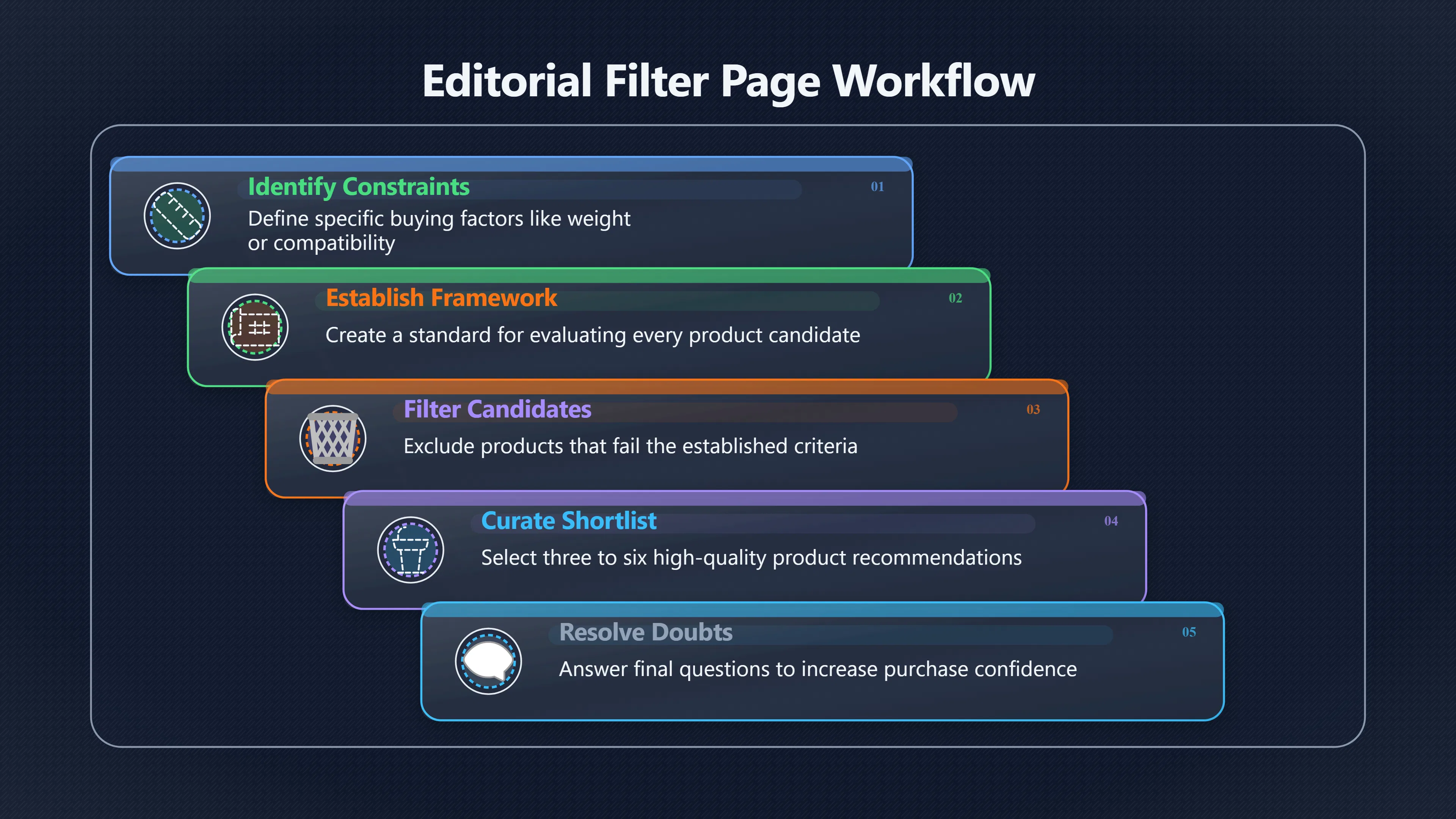
The defining feature of an editorial filter page is that the filtering happens before the product recommendations appear.
Instead of beginning with affiliate links, the page first identifies the buying constraints that brought the visitor to the search engine. Those constraints become the editorial framework.
For example, a page targeting “best portable monitor for working from cafés” is not really about portable monitors. It is about balancing:
- weight for carrying every day
- brightness for daylight use
- USB-C compatibility
- stable kickstands on small tables
- reasonable battery or power requirements
Once those criteria are established, every product can be judged against the same standard. Readers understand not only which products survived the filtering process but also why others were excluded.
This editorial approach creates a page that feels closer to expert advice than to a catalogue. Instead of asking readers to compare specifications themselves, the page performs that comparison for them.
Why three to six options can beat twenty listings
Long lists often look comprehensive but frequently make decisions harder.
Behavioural research has repeatedly shown that excessive choice can increase decision difficulty, particularly when alternatives appear similar. In affiliate publishing, that means a page with twenty almost identical recommendations often forces readers back into comparing specification tables instead of resolving uncertainty.
A shortlist of three to six carefully chosen products has several advantages.
- Each recommendation can receive meaningful explanation rather than a superficial paragraph.
- The differences between products become clearer.
- Buyers understand which compromises each option involves.
- Readers spend more time evaluating relevant information instead of scrolling.
For example, instead of publishing:
25 Best Air Purifiers
an editorial filter page might recommend only four:
- Best for pet hair
- Best for allergy sufferers
- Best for bedrooms
- Best value under a defined budget
The visitor immediately recognises where they fit.
This mirrors the way experienced sales staff guide purchases in physical shops. They rarely present every available product. They ask questions, eliminate unsuitable options and recommend a handful of strong candidates.
Criteria that belong above the product picks
One common weakness of affiliate pages is placing products before explanation.
An editorial filter reverses that order.
The first part of the page should explain the buying factors that genuinely influence success for that specific search intent. This prepares readers to understand the recommendations rather than simply trust them.
Useful criteria include:
Physical constraints
Dimensions, weight, storage space, portability and installation requirements.
Compatibility
Supported operating systems, connectors, accessories, replacement parts or ecosystem compatibility.
Running costs
Consumables, maintenance, subscription fees, replacement filters, batteries or ink.
Reliability
Warranty quality, software support, durability and known limitations.
Performance under the reader’s conditions
Instead of generic performance claims, explain performance within the scenario the search targets.
For instance:
- “quiet enough for shared offices”
- “works well with thick carpets”
- “comfortable for glasses wearers”
- “easy to clean after pet use”
These explanations become the page’s real value because retailers rarely organise products around practical buying situations.
Google’s guidance consistently encourages content that demonstrates first-hand understanding, original analysis and genuine usefulness rather than pages assembled primarily for search rankings.[Google for Developers]developers.google.comGoogle for DevelopersCreating Helpful, Reliable, People-First ContentGoogle's ranking systems are designed to present helpful, reliable i…

Make exclusions part of the editorial process
One of the strongest trust signals on an editorial filter page is explaining what did not make the shortlist.
This does not require reviewing every available product. Instead, identify the reasons certain common options fail the stated criteria.
Examples include:
- too noisy for flats
- lacks USB-C charging despite a portable use case
- replacement parts are unusually expensive
- unsuitable for users with wide feet
- requires features the target audience is unlikely to need
These exclusions demonstrate that recommendations were selected rather than merely collected.
They also reduce refund risk because readers understand the trade-offs before purchasing.
Build comparisons around decisions, not specifications
Editorial filters should compare products through buyer decisions rather than technical data alone.
Instead of a table containing dozens of specifications, organise comparisons around questions such as:
Buyer questionEditorial comparisonWhich option suits beginners?Identify the easiest product to use and explain why.Which lasts longest?Compare durability, warranty and expected maintenance.Which saves money over time?Include ownership costs rather than purchase price alone.Which should most readers avoid?Explain limitations honestly rather than hiding weaknesses.
This format keeps attention on the purchasing decision instead of encouraging endless specification comparison.
Use consistent reasoning for every recommendation
Every product should be evaluated using identical standards.
A practical template is:
- Who this is best for
- Why it made the shortlist
- The biggest compromise
- Situations where another recommendation is better
Consistency makes comparisons easier because readers know where to find the information that matters.
It also demonstrates editorial independence by acknowledging weaknesses rather than presenting every recommendation as universally excellent.
Related questions that raise purchase confidence
Editorial filter pages perform better when they resolve the final uncertainties preventing a purchase.
Instead of adding generic FAQ sections, answer questions that naturally arise from the filtering criteria.
Examples include:
“Can I buy a cheaper model?”
Explain which features are genuinely essential and which can safely be sacrificed.
“What should I avoid?”
Highlight common specification traps or marketing claims that rarely matter.
“How long should this last?”
Discuss expected lifespan, maintenance requirements and replacement costs.
“Is this worth paying extra for?”
Explain where premium features provide measurable benefits and where they simply increase price.
“Will this work for my situation?”
Address the exact scenario behind the long-tail search rather than broad use cases.[yotpo.com]yotpo.comlong tail keywords guideLong-Tail Keywords: The Ultimate Guide for 202628 Jan 2026 — Drive 2.5x higher conversions with long-tail keywords in 2026. Learn how to…
Questions like these increase confidence because they deal with objections that remain after readers have seen the shortlist.
Keep the page editorial rather than algorithmic
The temptation with long-tail affiliate SEO is to generate dozens of nearly identical pages targeting minor keyword variations.
Editorial filter pages succeed for the opposite reason.
Each page should have its own editorial judgement, reflecting a genuinely different buying situation. The search phrase determines the decision framework rather than merely changing a few adjectives.
For example:
- “best laptop for university students studying engineering”
- “best laptop for frequent business travel”
- “best laptop for video editing under £1,000”
These are not interchangeable pages with different headings. Each requires different weighting of battery life, graphics performance, portability, repairability, upgrade options and cost.
The filtering logic is what makes each page unique.
Why this format converts well for affiliate websites
Editorial filter pages closely match the mindset of buyers who are almost ready to purchase but still need reassurance that they are choosing the right option.
Instead of overwhelming visitors with every available product, they reduce uncertainty through explanation, exclusion and a carefully justified shortlist. That creates a better user experience, increases trust and gives affiliate recommendations a clear editorial purpose rather than making them appear to exist solely for commission.
As search engines increasingly reward original analysis and genuinely helpful product content, pages that explain why products belong in a shortlist—and equally importantly, why others do not—are more likely to satisfy both readers and modern quality expectations than thin lists built around keyword variations alone.[Google for Developers+2mariehaynes.com]developers.google.comGoogle for DevelopersCreating Helpful, Reliable, People-First ContentGoogle's ranking systems are designed to present helpful, reliable i…
Amazon book picks
Further Reading
Books and field guides related to How to Turn a Search Into a Shortlist. Use these as the next step if you want deeper reading beyond the article.
Everybody Writes
Helps create reader-first editorial content that supports trustworthy buying recommendations.
Don't Make Me Think, Revisited
Reinforces the value of reducing friction and helping users make confident choices through clear presentation.
The Art of SEO
Provides broader context for creating search-focused pages that satisfy user intent.
Building a StoryBrand 2.0
Shows how to simplify complex choices and communicate clear value to readers.
eBay marketplace picks
Marketplace Samples
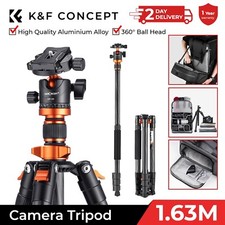
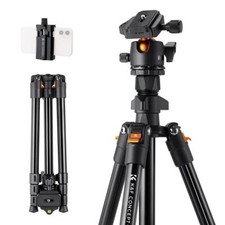
Live-tested eBay searches with available results related to this page.
Endnotes
1.
Source: developers.google.com
Link:https://developers.google.com/search/docs/fundamentals/creating-helpful-content
Source snippet
Google for DevelopersCreating Helpful, Reliable, People-First ContentGoogle's ranking systems are designed to present helpful, reliable i...
2.
Source: mariehaynes.com
Title: google ai systems
Link:https://www.mariehaynes.com/google-ai-systems/
Source snippet
This system uses machine learning to predict whether content is likely to be the most...Read more...
3.
Source: yotpo.com
Title: long tail keywords guide
Link:https://www.yotpo.com/blog/long-tail-keywords-guide/
Source snippet
Long-Tail Keywords: The Ultimate Guide for 202628 Jan 2026 — Drive 2.5x higher conversions with long-tail keywords in 2026. Learn how to...
Additional References
4.
Source: vervaunt.com
Link:https://vervaunt.com/the-definitive-guide-to-ecommerce-product-[reviews
Source snippet
The Definitive Guide to eCommerce Product ReviewsThis guide is designed to cover all of the key considerations – from the integration to...
5.
Source: webiano.digital
Title: unique content remains the strongest signal across seo and geo
Link:https://webiano.digital/unique-content-remains-the-strongest-signal-across-seo-and-geo/
Source snippet
& Marketing AgencyUnique content remains the strongest signal across SEO and...31 May 2026 — Google's helpful content guidance asks whet...
Published: May 2026
6.
Source: practicalecommerce.com
Title: helpful content per googles latest guidelines
Link:https://www.practicalecommerce.com/helpful-content-per-googles-latest-guidelines
Source snippet
'Helpful Content' per Google's Latest Guidelines10 Feb 2025 — According to Google's guidelines, owners and creators should display the mo...
7.
Source: leadershipinseo.com
Title: updates page quality rater guidelines
Link:https://www.leadershipinseo.com/p/updates-page-quality-rater-guidelines
Source snippet
Updates to Google's Page Quality Rater Guidelines4 Mar 2025 — The study analysed 7,392 product review queries and found the majority of h...
8.
Source: youtube.com
Link:https://www.youtube.com/watch?v=pu8J3ldS9mQ
Source snippet
40+ SEO landing pages and gets them indexed immediately...
9.
Source: darkroomagency.com
Title: ecommerce seo category page rankings 2026
Link:https://www.darkroomagency.com/observatory/ecommerce-seo-category-page-rankings-2026
Source snippet
This playbook covers technical foundations, category structure, and internal linking for 2026...
10.
Source: youtube.com
Link:https://www.youtube.com/watch?v=eyA2ydgXkVE
Source snippet
The Perfect Product Review & Promotion [Templates]({{ 'templates/' | relative_url }}) for Affiliate Marketing...
11.
Source: youtube.com
Title: Blogging Isn’t Dead: How Niche Blogs Still Make Money With SEO
Link:https://www.youtube.com/watch?v=CRaNVjcnbw0
Source snippet
How to Create Buyer's Guide Blog Posts to Drive Sales and Rank High...
12.
Source: youtube.com
Title: Affiliate Marketing Content Ideas
Link:https://www.youtube.com/watch?v=jiT_dzdDcgk
Source snippet
Affiliate Marketing Tutorial for Beginners in 2026 (Free Course)...
13.
Source: youtube.com
Title: How to Create Buyer’s Guide Blog Posts to Drive Sales and Rank High
Link:https://www.youtube.com/watch?v=elfpdFq2krE
Source snippet
Affiliate Marketing Content Ideas...
Topic Tree