Within Affiliate Pages
Why Baby Travel Gear Reviews Need More Trust
Baby travel gear affiliate pages need extra care because readers weigh convenience against safety, fit, and reliability.
On this page
- Safety sensitive buying decisions
- Fit, portability, and family use
- Evidence parents expect
Page outline Jump by section
Introduction
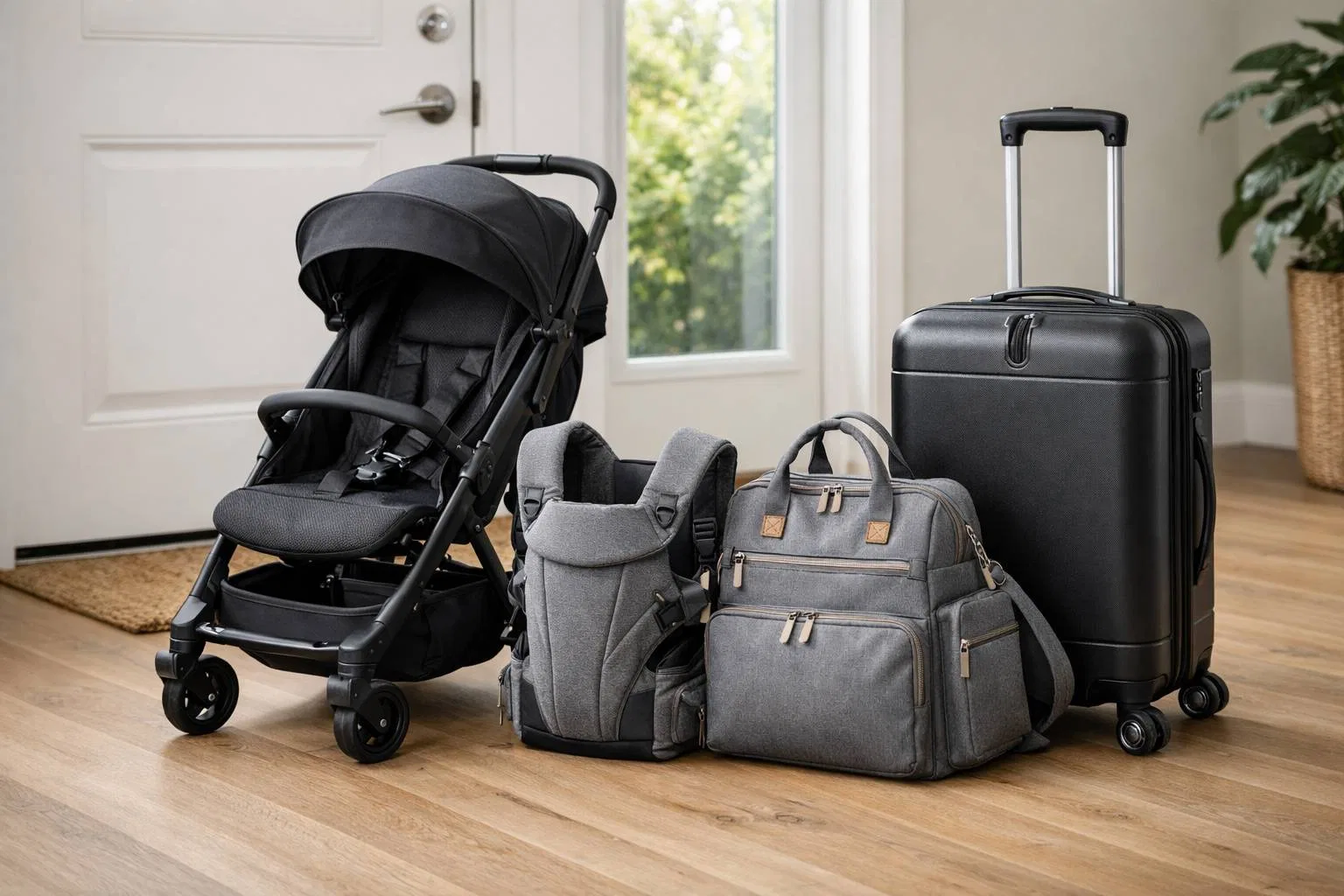
Baby travel gear is a high-trust affiliate niche because the reader is not simply choosing the most convenient pushchair, carrier, car seat, travel cot, changing bag or stroller accessory. They are trying to judge whether a product will fit their baby, their car, their journey, their storage space and their tolerance for risk. That changes the standard for affiliate content. A page that might be acceptable for a low-risk gadget can feel irresponsible when it recommends a travel system without explaining car-seat fit, safe sleep limits, recalls, compatibility, certification labels or how the item behaves in real family use.
For affiliate-site owners, the commercial opportunity is real, but so is the credibility burden. Baby travel pages can earn commissions only if they behave less like catalogues and more like safety-aware buying guides. Parents expect clear disclosures, practical evidence, named safety checks and honest warnings about who should not buy a product. In this niche, trust is not decoration; it is the product.
Why baby travel gear is not an ordinary affiliate category
A baby travel page sits at the uncomfortable intersection of convenience and safety. Travel systems promise speed: click the infant carrier from car base to pushchair frame, keep the baby asleep, fold the chassis, move through airports, fit into a boot, and avoid carrying multiple bulky items. That convenience is exactly why the category converts well for affiliate sites. It also creates a risk: the easier a product looks, the more a review page needs to explain the limits of that convenience.
Car seats are the clearest example. They are essential for vehicle travel, but both the American Academy of Pediatrics and The Lullaby Trust stress that infant car seats are for travel, not routine sleep, feeding or general use outside the vehicle. The AAP’s family guidance says rear-facing-only seats should be used only for a child’s travel, while The Lullaby Trust says babies who fall asleep in a car seat should be moved to a firm, flat sleep surface when the journey ends.[HealthyChildren.org]healthychildren.org3. All-in-one car seats (used rear facing).Read moreCar Seats: Information for Families16 Apr 2026 — Should be used only for a child's travel (not sleeping, feeding or any other use outside…
That distinction matters for affiliate pages because many “best travel system” articles sell the emotional benefit of not waking a sleeping baby. A trustworthy article can still explain why a travel system is useful, but it should not quietly imply that a car seat is a substitute for a cot, Moses basket, bassinet or approved travel cot. The reader needs to know where the convenience stops.
The same applies to travel cots and portable sleep products. UK product safety alerts have included travel cots recalled because small parts could obstruct a young child’s airway, while a 2026 UK recall of Puggle Airlite travel cot models told consumers to stop using the products immediately and register for a refund.[GOV.UK]assets.publishing.service.gov.ukUK Product RecallRecallJune 12, 2026 — The product has been recalled from end users by The Nursery Store. (Online 4 Baby Limited). Consumers should stop u… A site that ranks “best travel cots for holidays” without checking recall databases, safety standards or the firmness and fit of the mattress is not merely thin; it is risky.
Safety-sensitive buying decisions
Baby travel gear affiliate pages should begin from a simple principle: safety claims must be verifiable, not decorative. Phrases such as “safe”, “secure”, “parent-approved” and “crash-tested” are too vague unless the page explains what was checked and what standard or source supports the claim.
For car seats in the UK, the basic legal context is that children must normally use a child car seat until they are 12 years old or 135 centimetres tall, whichever comes first, and the seat must be chosen according to the child’s height or weight.[GOV.UK]GOV.UKthe law: Using a child car seat or booster seatJanuary 15, 2012 — Children must normally use a child car seat until they're 12 years old… The NHS also warns that it is dangerous and illegal to place a rear-facing baby seat in a front passenger seat with an active airbag, and says it is always safer for children to travel in the back of the car.[nhs.uk]nhs.ukChoosing a baby car seatIt is dangerous and illegal to carry a baby in a rear-facing baby seat in a front passenger seat that has an acti…
A credible affiliate review should therefore avoid presenting “best overall” as if one seat works for every family. The safest seat is not only the one with the strongest marketing. It must fit the child, the vehicle, the installation method and the journey. In the United States, the National Highway Traffic Safety Administration gives installation guidance that includes using either lower anchors or a seat belt to secure a car seat, not both, unless the manufacturer specifically allows it.[NHTSA]nhtsa.govOpen source on nhtsa.gov. That kind of detail is exactly what many affiliate articles miss.
The recall record shows why a live safety mindset matters. The US Consumer Product Safety Commission maintains a recalls database for consumer products, including strollers and car-seat accessories. In 2026, its stroller-and-car-seat category included a Joolz Aer2 car-seat adapter recall because the adapters could fail to attach properly to the stroller, allowing the car seat to fall and posing a serious fall hazard.[U.S. Consumer Product Safety Commission]cpsc.govOpen source on cpsc.gov. Consumer Reports’ 2026 baby-recall coverage also listed multiple nursery and baby products recalled for hazards such as failed mandatory standards, suffocation risk, entrapment risk and unsafe sizing.[Consumer Reports]consumerreports.orgOpen source on consumerreports.org.
For an affiliate site, this creates a non-negotiable editorial duty. A baby travel gear page should not be frozen at publication. It needs visible update dates, recall checks, and a process for removing or downgrading products when safety information changes. A high-ranking review from two years ago can become misleading if the linked model, adapter, cot, mattress or bundle has changed.

Fit, portability, and family use
Parents do not buy baby travel gear in abstract conditions. They buy it for a specific set of constraints: a small car boot, a second-floor flat, a Ryanair cabin bag limit, a toddler sibling, a rural lane, a city bus, grandparents’ car, a premature baby, a tall parent, or a nursery run that requires folding a pushchair one-handed in the rain. Trustworthy affiliate content makes those constraints visible.
A useful travel-system review should separate at least four kinds of fit:
- Baby fit: height and weight limits, harness position, newborn insert rules, and whether the recline is appropriate for the child’s age.
- Vehicle fit: rear-facing space, base compatibility, seat-belt routing, ISOFIX or LATCH requirements, and whether the front passenger seat must be moved forward.
- Home and travel fit: folded size, boot space, public transport use, lift width, stair carrying, airline gate-checking, and storage in small homes.
- Caregiver fit: handle height, basket access, brake usability, one-handed folding, lifting weight and whether a smaller adult can carry it safely.
This is where affiliate sites can add value that merchant pages rarely provide. A brand may list chassis weight and folded dimensions; a good affiliate page translates those numbers into ordinary use. For example, a pushchair that folds compactly may still be awkward if the seat must be removed first. A travel cot may be “lightweight” but still difficult to assemble while holding a tired baby. A car-seat stroller adapter may be convenient, but only if the exact car seat and pushchair pairing is manufacturer-approved.
Parent-tested sites often understand this better than generic commerce pages. Mumsnet’s travel-system reviews, for example, describe research and testing with real parents, and its category framing includes use cases such as country living, city living, lightweight options and mid-range budgets rather than a single universal winner.[Mumsnet]mumsnet.comtravel systemstravel systems Consumer Reports similarly treats travel systems as combinations, rating both the stroller and the infant car seat rather than assuming the bundle is only as good as its most attractive component.[Consumer Reports]consumerreports.orgOpen source on consumerreports.org.
The affiliate lesson is straightforward: the more specific the family scenario, the more useful the recommendation. “Best for travel” is weak. “Best for parents who need a compact fold, a lie-flat newborn option, and a car seat that fits a small hatchback” is much stronger, provided the evidence supports it.
Evidence parents expect
Parents are unusually alert to weak evidence in baby gear reviews because the stakes are personal. They can tell when a page has merely rearranged retailer descriptions. They are also likely to compare several sources before buying, especially for expensive items such as travel systems and rotating car seats.
The strongest affiliate pages in this category usually show several layers of evidence:
- First-hand testing: original photos, videos, weight measurements, folding demonstrations, car-boot tests, stair-carrying notes and cleaning observations.
- Safety-source checks: official recall databases, manufacturer safety notices, UK Government product alerts, CPSC recalls, NHS or AAP guidance, and relevant legal requirements.
- Compatibility verification: exact model names, adapter codes, base names, stroller frame versions and manufacturing-date caveats.
- Limitations: who should avoid the product, where the fit may fail, and what the review did not test.
- Update discipline: visible review dates, “last checked” notes and removal of recalled or discontinued models.
Parents.com publishes product-review guidelines that illustrate the kind of trust signals readers increasingly expect: expert consultation before testing, real-world use by parents and caregivers, fact-checking, affiliate-commission disclosure, and recall monitoring through the CPSC.[Parents]parents.comOur Product Review GuidelinesFor products less suited to physical testing, such as supplements, the team employs detailed research methodologies and consults field ex… Not every small affiliate site can match a large publisher’s testing budget, but it can copy the habits that matter most: show the method, separate tested facts from researched facts, and state conflicts of interest plainly.
The disclosure point is especially important. In the UK, the Advertising Standards Authority says affiliate marketing falls under the CAP Code when affiliates promote a brand in exchange for payment tied to attributable clicks or purchases.[ASA]asa.org.ukaffiliate marketingaffiliate marketing The FTC’s endorsement guidance is built on the same basic consumer-protection idea: endorsements must be honest and not misleading, and material connections should be clear to readers.[Federal Trade Commission]ftc.govFederal Trade Commission FTC's Endorsement Guides: What People Are AskingFederal Trade Commission FTC's Endorsement Guides: What People Are Asking
A baby travel affiliate page should therefore avoid burying its disclosure in a footer. A plain line near the top is better: the site may earn commission from links, but recommendations are based on testing, safety checks and suitability, not commission rate. That disclosure does not weaken trust. In a safety-sensitive niche, hiding the relationship does.
The thin-affiliate problem is sharper in baby travel
Google’s spam policies define thin affiliation as publishing pages with affiliate links where product descriptions and reviews are copied directly from the original merchant without original content or added value.[Google for Developers]developers.google.comOpen source on google.com. In baby travel gear, that is not only an SEO problem. It is a reader-safety problem.
A thin affiliate page might list a pushchair’s colour options, price and star rating, but miss the fact that the infant carrier is not suitable for prolonged sleep. It might describe a travel cot as “perfect for overnight trips” without checking mattress firmness, side height, folding-lock stability or recall history. It might recommend a cheap car-seat accessory without confirming that it is approved by the car-seat and stroller manufacturers. The page can look polished and still fail the job parents came for.
The problem becomes worse on marketplaces and social platforms where unsafe products may be cheap, fast-moving and hard to trace. The Child Accident Prevention Trust has warned that rogue online sellers abuse parents’ trust by selling dangerous products with risks such as button batteries, strong magnets, overlong cords and small parts.[capt.org.uk]capt.org.ukRogue online sellers abuse parents' trustRogue online sellers abuse parents' trust In 2025, Which? found that potentially dangerous child car seats were being sold online in the UK without mandatory certification labels, with some listings using misleading descriptions despite disclaimers.[The Guardian]theguardian.comThe low cost of these seats—priced between £12.50 and £40 versus £80+ for certified versions—raises concerns that cost-conscious families…
For affiliate publishers, this means “available on Amazon” or “popular on TikTok” is not enough. If a site links to marketplace products, it should check the seller, model identity, certification label, recall status and whether the listing matches the reviewed item. Otherwise, the affiliate link may send a parent to a product that is not the same as the one described.
How safety trust changes the affiliate business model
Baby travel gear can be commercially attractive because products are relatively expensive, replacement cycles are predictable, and parents often buy bundles: car seat, base, stroller, travel cot, carrier, changing bag, rain cover, footmuff, cup holder and travel organiser. But a site that maximises short-term clicks at the expense of safety trust is fragile. It risks complaints, poor reader loyalty, reputational damage, search-quality problems and legal exposure.
A more durable model looks different. It earns by becoming a decision aid, not a link farm. That means fewer, better pages; more testing notes; clearer warnings; and a willingness to recommend “do not buy yet” when a product lacks evidence.
A strong baby travel affiliate page might include:
- a short affiliate disclosure at the top;
- a “safety checks first” box before the product list;[rospa.com]rospa.comSource details in endnotes.
- the latest recall-check date for each recommended model;
- exact child size limits and car-seat regulation labels;
- compatibility notes for bases, adapters and pushchair frames;
- practical fit tests, such as boot space and public transport use;
- a clear explanation of safe sleep limits for car seats and travel cots;
- alternatives for common family situations, such as twins, no car, frequent flights or small flats.
This is not only more ethical; it is better content. It gives the reader reasons to stay, trust, compare and return.
Common trust failures on baby travel gear sites
The biggest weaknesses in baby travel affiliate content are rarely dramatic. They are small omissions that compound into poor advice.
One common failure is treating a travel system as a single product. A bundle may include a good stroller and a mediocre car seat, or a strong car seat and a chassis that is too heavy for daily travel. Consumer Reports’ approach of evaluating both stroller performance and infant car-seat performance shows why the bundle needs to be broken apart.[Consumer Reports]consumerreports.orgOpen source on consumerreports.org.
Another failure is ignoring time. Baby products change model numbers, standards, fabrics, adapters and base systems. A review that says “compatible with Maxi-Cosi” or “fits most cars” without exact model details may become inaccurate quickly. Recall databases exist because safety status changes after products reach the market.[U.S. Consumer Product Safety Commission]cpsc.govOpen source on cpsc.gov.
A third failure is letting convenience language crowd out use warnings. If a page celebrates the benefit of moving a sleeping baby from car to stroller, it should also explain that car seats are not intended as a main sleep space. The Lullaby Trust makes that point plainly: car seats are designed to keep babies safe while travelling, not to replace cots or high chairs.[The Lullaby Trust]lullabytrust.org.ukIt's OK for your baby to fall asleep in a car seat when travelling but take them out as soon as…
A fourth failure is relying on star ratings. Parent reviews are useful for durability, delivery issues, folded size, comfort and customer service, but they cannot prove crash protection, regulatory compliance or safe sleep suitability. A credible page can use customer feedback, but it should not confuse popularity with safety evidence.
What a trustworthy baby travel affiliate page should say plainly
The reader should not have to infer the site’s standards. A good page can state them in ordinary language:
“We only recommend baby travel products after checking current recall notices, safety guidance, product specifications and real-use fit. Some links are affiliate links, which means we may earn a commission, but this does not affect our safety notes or rankings. A product can be popular and still be unsuitable for your family.”
That kind of statement is valuable only if the page then proves it. The proof is in the details: exact model names, tested scenarios, safety-source citations, visible updates and honest negatives.
The most helpful reviews also name the trade-off. A compact travel stroller may be excellent for flights but poor on cobbles. A lightweight travel cot may be easy to carry but harder to assemble securely. A car-seat-and-stroller system may be useful for short transitions but should not become a sleep routine. A budget seat may meet legal standards, but a family may still need help checking installation, fit and ease of correct use.
This is where baby travel gear sites can outperform merchants. The merchant wants to sell the product. The parent wants to know whether the product fits their real life without creating hidden risk. The affiliate site earns trust when it sides visibly with the parent.
The practical standard for this niche
Baby travel gear reviews need more trust because the purchase decision combines money, safety, fit and family stress. A reader is not asking only “Which one is best?” They are asking: “Can I use this safely with my baby, my car, my trip, my home and my routine?”
For affiliate publishers, that creates a higher bar than ordinary product SEO. The site should disclose commissions clearly, avoid thin merchant-copy pages, check official safety sources, update recommendations when recalls appear, and explain limits as carefully as benefits. A page that does this may publish fewer reviews, but each one is more defensible and more useful.
The best baby travel affiliate content does not frighten parents or pretend that every product is dangerous. It gives them the confidence to choose carefully. That is the trust gap a good site can fill — and the reason this niche rewards publishers who treat safety as part of the business model, not a footnote beneath the buy button.
Amazon book picks
Further Reading
Books and field guides related to Why Baby Travel Gear Reviews Need More Trust. Use these as the next step if you want deeper reading beyond the article.
Affiliate Marketing
Directly explains how affiliate websites generate income and how to build profitable affiliate businesses.

What to expect the first year
Offers broad first-year parenting guidance that complements responsible baby travel gear purchasing.
Baby Bargains: Secrets to Saving 20% to 50% on Baby Furniture...
Directly covers evaluating baby products, safety, value, and trustworthy buying decisions.
Caring for Your Baby and Young Child
Supports the article's emphasis on safety, evidence, and informed purchasing for baby-related products.
eBay marketplace picks
Marketplace Samples
Live-tested eBay searches with available results related to this page.



Endnotes
1.
Source: healthychildren.org
Title: 3. All-in-one car seats (used rear facing).Read more
Link:https://www.healthychildren.org/English/safety-prevention/on-the-go/Pages/Car-Safety-Seats-Information-for-Families.aspx
Source snippet
Car Seats: Information for Families16 Apr 2026 — Should be used only for a child's travel (not sleeping, feeding or any other use outside...
2.
Source: assets.publishing.service.gov.uk
Title: UK Product Recall
Link:https://assets.publishing.service.gov.uk/media/6a2c094415f2a70fac7e5ebf/2606-0135-product-recall-puggle-airlite-3-in-one-and-2-in-one-travel-cots.pdf
Source snippet
RecallJune 12, 2026 — The product has been recalled from end users by The Nursery Store. (Online 4 Baby Limited). Consumers should stop u...
Published: June 12, 2026
3.
Source: GOV.UK
Link:https://www.gov.uk/child-car-seats-the-rules
Source snippet
the law: Using a child car seat or booster seatJanuary 15, 2012 — Children must normally use a child car seat until they're 12 years old...
Published: January 15, 2012
4.
Source: nhs.uk
Link:https://www.nhs.uk/baby/first-aid-and-safety/safety/choosing-a-baby-car-seat/
Source snippet
Choosing a baby car seatIt is dangerous and illegal to carry a baby in a rear-facing baby seat in a front passenger seat that has an acti...
5.
Source: nhtsa.gov
Link:https://www.nhtsa.gov/vehicle-safety/car-seats-and-booster-seats
6.
Source: cpsc.gov
Link:https://www.cpsc.gov/recall-products/strollers-and-car-seats
7.
Source: mumsnet.com
Title: travel systems
Link:https://www.mumsnet.com/reviews/travel-systems
8.
Source: parents.com
Title: Our Product Review Guidelines
Link:https://www.parents.com/parents-product-review-guidelines-5271118
Source snippet
For products less suited to physical testing, such as supplements, the team employs detailed research methodologies and consults field ex...
9.
Source: asa.org.uk
Title: affiliate marketing
Link:https://www.asa.org.uk/advice-online/affiliate-marketing.html
10.
Source: ftc.gov
Title: Federal Trade Commission FTC’s Endorsement Guides: What People Are Asking
11.
Source: developers.google.com
Link:https://developers.google.com/search/docs/essentials/spam-policies
12.
Source: capt.org.uk
Title: Rogue online sellers abuse parents’ trust
Link:https://capt.org.uk/rogue-online-sellers-abuse-parents-trust/
13.
Source: cpsc.gov
Link:https://www.cpsc.gov/Recalls
14.
Source: GOV.UK
Link:https://www.gov.uk/product-safety-alerts-reports-recalls
15.
Source: healthychildren.org
Title: Car Safety Seats Product Listing.aspx
Link:https://www.healthychildren.org/English/safety-prevention/on-the-go/Pages/Car-Safety-Seats-Product-Listing.aspx
16.
Source: GOV.UK
Link:https://www.gov.uk/child-car-seats-the-rules/when-a-child-can-travel-without-a-car-seat
17.
Source: GOV.UK
Link:https://www.gov.uk/marketing-advertising-law/advertising-codes-of-practice
18.
Source: support.google.com
Link:https://support.google.com/webmasters/answer/9044175?hl=en
19.
Source: help-for-early-years-providers.education.gov.uk
Title: education.gov.uk Safer sleep
Link:https://help-for-early-years-providers.education.gov.uk/health-and-wellbeing/safer-sleep
20.
Source: publications.aap.org
Link:https://publications.aap.org/book/chapter-pdf/788128/aap_9781610025140-part05-ch22.pdf
21.
Source: nidirect.gov.uk
Link:https://www.nidirect.gov.uk/articles/child-car-seats-restraints-and-seat-belts
22.
Source: capt.org.uk
Link:https://capt.org.uk/car-safety/
23.
Source: assets.publishing.service.gov.uk
Link:https://assets.publishing.service.gov.uk/media/63546c76d3bf7f193fd44ce3/2208-0435-product-safety-report-baby-travel-system.pdf
24.
Source: derbyshire.gov.uk
Link:https://www.derbyshire.gov.uk/transport-roads/road-safety/car-seats/car-safety-seats-for-children.aspx
25.
Source: wwl.nhs.uk
Link:https://www.wwl.nhs.uk/media/Safer%20Sleep%20-%20Emergency%20Situations%20Lullaby%20Trust.pdf
26.
Source: bedslutonchildrenshealth.nhs.uk
Link:https://bedslutonchildrenshealth.nhs.uk/staying-safe-and-accident-prevention/car-seat-safety/
27.
Source: lullabytrust.org.uk
Link:https://www.lullabytrust.org.uk/baby-safety/baby-product-information/car-seats/
Source snippet
It's OK for your baby to fall asleep in a car seat when travelling but take them out as soon as...
28.
Source: consumerreports.org
Link:https://www.consumerreports.org/babies-kids/baby-product-recalls/baby-product-recalls-parents-caregivers-should-be-aware-of-a5859124070/
29.
Source: consumerreports.org
Link:https://www.consumerreports.org/babies-kids/strollers/top-picks-for-travel-systems-a4295881876/
30.
Source: theguardian.com
Link:https://www.theguardian.com/business/2025/sep/15/car-seats-being-sold-online-in-uk-that-risk-lives-of-children-which-finds
Source snippet
The low cost of these seats—priced between £12.50 and £40 versus £80+ for certified versions—raises concerns that cost-conscious families...
31.
Source: lullabytrust.org.uk
Link:https://www.lullabytrust.org.uk/wp-content/uploads/2025/02/Car-seat-factsheet.pdf
32.
Source: lullabytrust.org.uk
Link:https://www.lullabytrust.org.uk/baby-safety/travel-and-weather/safer-sleep-away-from-home-in-emergency-situations/
33.
Source: asa.org.uk
Title: remit social media
Link:https://www.asa.org.uk/advice-online/remit-social-media.html
34.
Source: parentsandbrands.com
Title: influencers out influenced for parents by product reviews and recommendations
Link:https://parentsandbrands.com/influencers-out-influenced-for-parents-by-product-reviews-and-recommendations/
35.
Source: rospa.com
Link:https://www.rospa.com/home-safety/product-safety
36.
Source: bebeconfort.com
Title: Safety Notices
Link:https://www.bebeconfort.com/c/international/safety-notices
Additional References
37.
Source: youtube.com
Title: How to Safely Strap Your Baby in a Stroller | Step-by-Step Guide for New Parents
Link:https://www.youtube.com/watch?v=D8LS3dBBCus
Source snippet
Britax Phases Travel System Review: Safe, Stylish, and Surprisingly Easy for Parents...
38.
Source: youtube.com
Link:https://www.youtube.com/watch?v=7jE3CjrKN1Q
Source snippet
Best Stroller Car Seat Combo 2026 [Watch This Before You Make a Choice!]...
39.
Source: youtube.com
Title: A Baby Gear Expert’s Guide to What You Actually Need
Link:https://www.youtube.com/watch?v=2vjGJU3oQHk
Source snippet
How to Safely Strap Your Baby in a Stroller | Step-by-Step Guide for New Parents...
40.
Source: youtube.com
Link:https://www.youtube.com/watch?v=x50w8cGtcyc
Source snippet
Baby Safety Tips - Stroller Safety | Parents...
41.
Source: ecfr.gov
Link:https://www.ecfr.gov/current/title-16/chapter-I/subchapter-B/part-255
42.
Source: trafficsafetymarketing.gov
Link:https://www.trafficsafetymarketing.gov/safety-topics/child-safety/car-seats-boosters-seat-belts
43.
Source: federalregister.gov
Title: guides concerning the use of endorsements and testimonials in advertising
Link:https://www.federalregister.gov/documents/2023/07/26/2023-14795/guides-concerning-the-use-of-endorsements-and-testimonials-in-advertising
44.
Source: linkedin.com
Link:https://www.linkedin.com/pulse/10-google-spam-policies-every-website-owner-should-know-bilal-izqhe
45.
Source: fathercraft.com
Link:https://fathercraft.com/disclosures/?srsltid=AfmBOorQl9GzUkWiehjPmnOWoo6dduHA2og-mR_EAgmzHQmW4FQLPPnr
46.
Source: k2l.co.uk
Link:https://www.k2l.co.uk/baby-children-marketing-everything-you-need-to-know/
Topic Tree
Follow this branch
Parent topic
Affiliate PagesRelated pages 29
- Amazon Is Amazon Associates Still Good for Beginners?
- Appliances What Kitchen Appliance Reviews Often Miss
- Authority Can Expertise Beat Bigger Affiliate Sites?
- Business Tools Can Small Business Software Be a Better Affiliate Niche?
- Commissions How Do Affiliate Websites Actually Get Paid?
- +24 more in sidebar