Within Reviews
What Happens After Months of Use?
Products that seem excellent on day one can fail months later, so durable goods need follow-up evidence.
On this page
- Why launch day reviews miss durability
- Update schedules for different product risks
- How to show wear, failure, and repairs
Page outline Jump by section
Introduction
A product that performs well during the first week of testing can still become a poor recommendation after six months of daily use. Hinges loosen, batteries lose capacity, coatings wear away, software updates introduce new problems, and warranty support may prove far better—or worse—than the manufacturer promised. For affiliate review sites, these longer-term outcomes are often the difference between a recommendation readers trust and one that feels like a sales pitch.
 Long-term review updates demonstrate that a publisher remains accountable for earlier recommendations. Rather than treating a review as a one-off article published on launch day, trusted review sites revisit products after meaningful periods of ownership, documenting wear, failures, repairs and customer support experiences with evidence. This approach aligns with search engine guidance that encourages original experience, meaningful comparisons and evidence-based assessments rather than recycled specifications.[GOV.UK]GOV.UKShort guide for businesses: publishing consumer reviews…April 4, 2025 — 4 Apr 2025 — This summary is for businesses who publish consum…
Why Launch-Day Reviews Miss Durability
The first few days with a product reveal only part of the ownership experience. Many durability problems appear only after repeated use under ordinary conditions.
Examples include:
- Batteries that lose noticeable capacity after hundreds of charging cycles.
- Shoes whose cushioning compresses after months of running.
- Washing machines or vacuum cleaners that develop recurring faults after regular use.
- Laptop keyboards or trackpads that become unreliable after extended typing.
- Outdoor furniture whose finishes deteriorate after exposure to weather.
- Cookware coatings that degrade after repeated washing and heating.
A reviewer who publishes only an initial impression cannot honestly evaluate these issues because they have not yet occurred. Readers increasingly recognise this limitation, which is why review sites that revisit products months later often develop stronger reputations than sites built entirely around launch coverage.
For affiliate publishers, this is particularly important because recommendations continue earning commissions long after publication. If evidence changes, the review should change with it rather than preserving an outdated verdict.
Create a Review Timeline Instead of a Single Review
Durability becomes much easier to evaluate when reviews are treated as an ongoing record rather than a finished document.
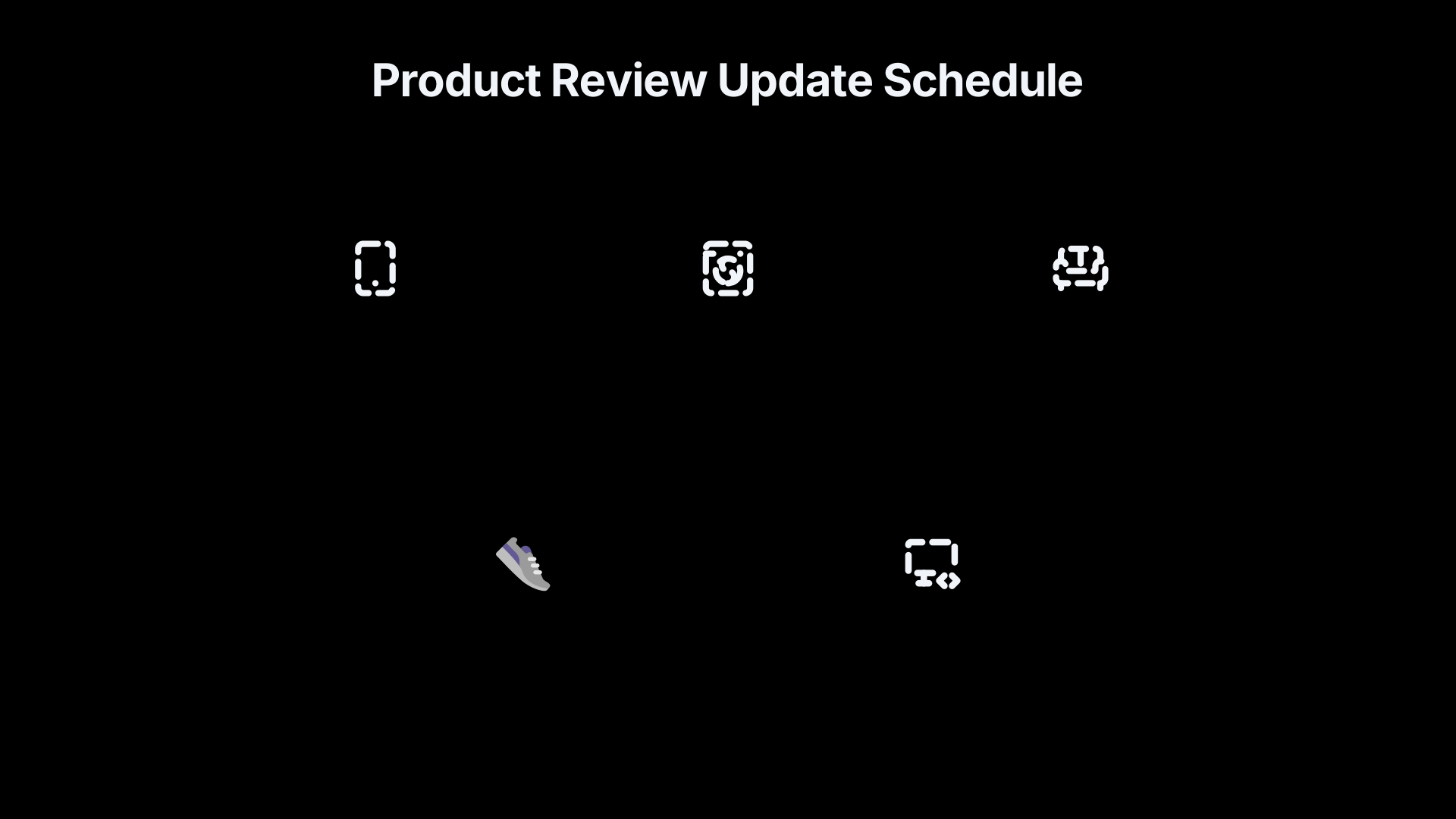
A practical update schedule varies according to product risk.
Product typeSuggested follow-upElectronics1 month, 6 months, 12 monthsHousehold appliances3 months, 12 monthsMattresses and furniture6 months, 12 months, 24 monthsClothing and footwearAfter repeated washing or mileage milestonesPower tools and garden equipmentAfter seasonal use and annual maintenanceSoftware-dependent devicesAfter major firmware or operating system updates
The schedule matters less than consistency. Readers quickly learn whether a site genuinely revisits products or merely promises future updates.
Show Evidence Instead of Making Durability Claims
Long-term updates become persuasive when readers can inspect the evidence themselves.
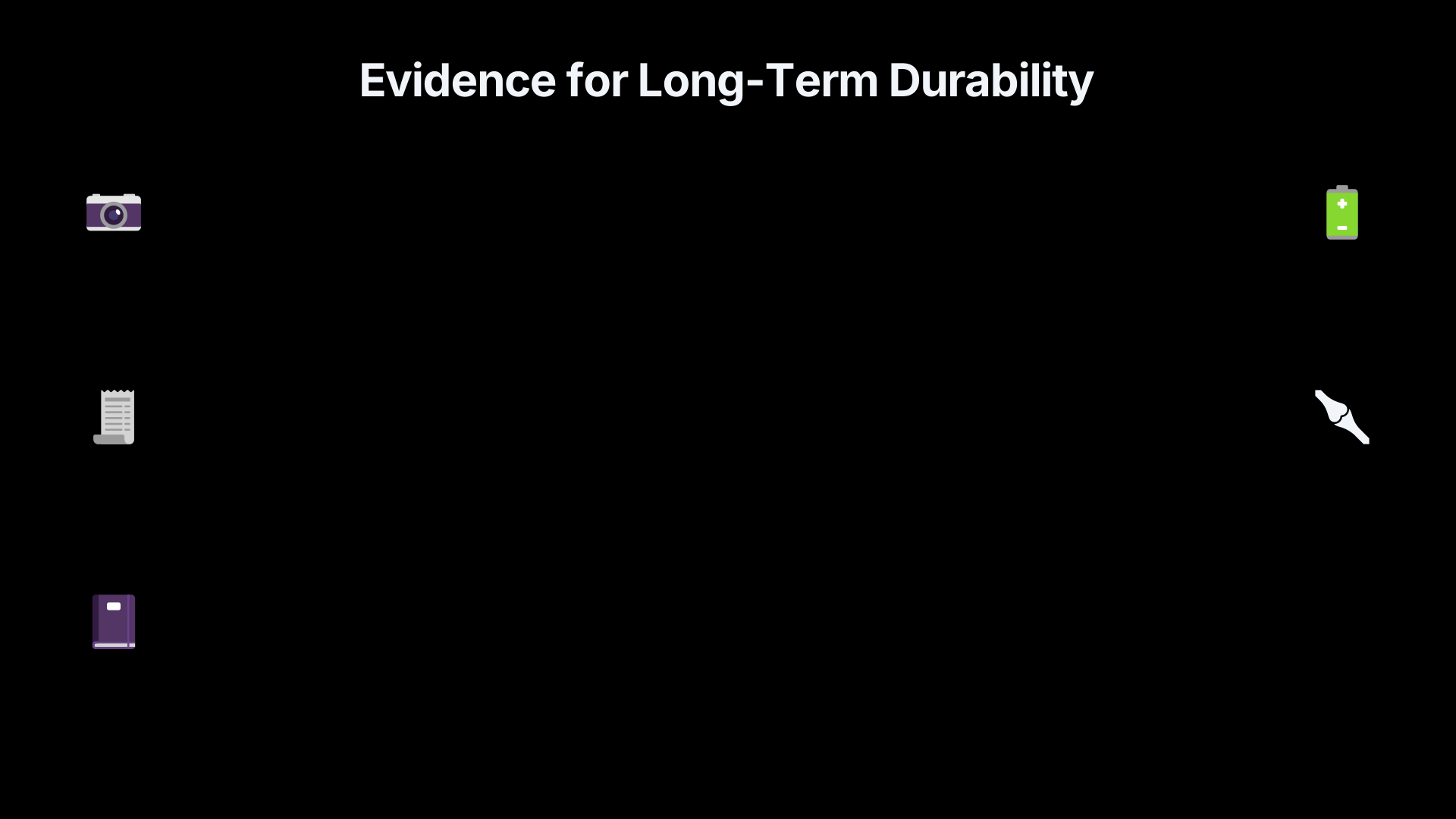
Useful evidence includes:
- Photographs showing cosmetic wear over time.
- Close-up images of stress points, stitching, hinges or connectors.
- Battery health readings taken months apart.
- Measured performance before and after extended use.
- Repair invoices where applicable.
- Warranty claim timelines.
- Replacement part costs.
- Maintenance records.
- Notes describing changes after software or firmware updates.
Instead of writing:
“The finish seems durable.”
A stronger update might read:
“After nine months of daily office use, the aluminium palm rest shows minor polishing but no scratches, while the keyboard legends remain intact.”
Specific observations help readers judge whether the wear matches their expectations.
Record Failures Honestly
One defective product does not necessarily prove poor reliability. Equally, one flawless review sample does not prove excellent durability.
Trusted reviewers distinguish between:
- isolated defects
- recurring design weaknesses
- manufacturing quality problems
- expected cosmetic wear
- misuse
- maintenance issues
For example, if a laptop develops a failed fan after eight months, the review should explain:
- how heavily it was used
- environmental conditions
- whether the failure appears common
- whether the manufacturer repaired it
- how long the repair took
- whether replacement parts were readily available
The repair experience often matters almost as much as the original fault.
Include Warranty and Customer Support Outcomes
Many buying mistakes become visible only when something goes wrong.
Long-term reviews should therefore document:
- Response time from customer support.
- Ease of making a warranty claim.
- Availability of replacement parts.
- Shipping costs for repairs.
- Repair turnaround.
- Whether the repair permanently solved the issue.
A company offering excellent post-sale support may deserve a stronger recommendation than one whose product performs similarly but proves difficult to repair.
This information is rarely available in launch-day reviews but becomes highly valuable to readers considering expensive purchases.
Distinguish Wear from Failure
Readers benefit from understanding whether observed changes are normal or unexpected.
Normal wear may include:
- slight fabric fading
- polished keycaps
- reduced battery capacity within expected limits
- minor surface scratches
- gradual cushion softening
Potential durability concerns include:
- cracked hinges
- delaminating materials
- broken stitching
- swelling batteries
- recurring electronic faults
- premature motor failures
- structural deformation
Making this distinction prevents reviewers from overstating minor cosmetic issues while still highlighting genuine reliability concerns.

Update Recommendations When the Evidence Changes
A review should never remain frozen if long-term evidence contradicts the original conclusion.
Reasons to revise a rating include:
- repeated reliability failures
- improved firmware fixing earlier problems
- successful product recalls
- widespread manufacturing defects
- better competing products
- significant price changes affecting value
Readers generally appreciate visible corrections more than silent edits. A dated update log explaining what changed makes the review appear more credible than quietly rewriting the article.
For example:
- March 2026: Initial review published.
- September 2026: Six-month update added with battery testing.
- March 2027: Recommendation reduced following repeated hinge failures and poor warranty response.
An update history also signals that recommendations remain under active editorial review rather than existing solely to attract search traffic.
Use Community Reports Carefully
Reader experiences can strengthen long-term reviews but should not replace direct testing.
Useful community evidence includes recurring reports of:
- identical failures
- consistent repair experiences
- common maintenance problems
- software regressions
- replacement part shortages
However, isolated online complaints should not automatically be treated as proof of widespread defects. Negative experiences are naturally overrepresented in public forums because satisfied owners are less likely to post.
A balanced long-term review compares personal testing with broader ownership patterns before changing a recommendation.
Why Long-Term Updates Build More Trust
Affiliate publishers face an obvious credibility challenge: they earn money when readers buy products. Long-term review updates help demonstrate that editorial judgement comes before commission income.
Readers are more likely to trust a site that:
- revisits products after meaningful use,
- documents wear with photographs and measurements,
- reports failures even when they reduce affiliate income,
- updates recommendations when evidence changes, and
- explains repairs and warranty experiences rather than hiding them.
That approach creates a review archive that becomes more valuable over time. Instead of producing disposable launch coverage, the site develops a history of evidence that helps readers understand not only which products perform well initially, but which continue to justify their recommendation after months or even years of real ownership.
Amazon book picks
Further Reading
Books and field guides related to What Happens After Months of Use?. Use these as the next step if you want deeper reading beyond the article.
The Lean Startup
Rating: 3.0/5 from 33 Google Books ratings
Promotes iterative testing, learning from real-world feedback, and updating conclusions over time.
Everybody Writes
Helps publishers produce trustworthy, evidence-based content and meaningful updates.
The Copywriter's Handbook
Rating: 4.0/5 from 5 Google Books ratings
Covers persuasive writing while emphasizing credibility and substantiated claims.
Influence, New and Expanded
Provides context for ethical persuasion and credibility in recommendation content.
eBay marketplace picks
Marketplace Samples
Example marketplace items related to this page. Use the search link to explore similar finds on eBay.




Endnotes
1.
Source: GOV.UK
Link:https://www.gov.uk/government/publications/fake-reviews/short-guide-for-businesses-publishing-consumer-reviews-and-complying-with-consumer-protection-law
Source snippet
Short guide for businesses: publishing consumer reviews...April 4, 2025 — 4 Apr 2025 — This summary is for businesses who publish consum...
Published: April 4, 2025
Additional References
2.
Source: ftc.gov
Title: consumer reviews testimonials rule questions answers
Link:https://www.ftc.gov/business-guidance/resources/consumer-reviews-testimonials-rule-questions-answers
Source snippet
Federal Trade CommissionThe Consumer Reviews and Testimonials Rule: Questions...8 Nov 2024 — The Commission's Rule on the Use of Consume...
3.
Source: traverssmith.com
Title: fake or misleading consumer reviews times running out to put your house in order
Link:https://www.traverssmith.com/knowledge/knowledge-container/fake-or-misleading-consumer-reviews-times-running-out-to-put-your-house-in-order/
Source snippet
The Digital Markets, Competition and Consumers Act 2024 imposes new requirements on businesses to...Read more...
4.
Source: khlaw.com
Title: ftc finalizes rule against fake reviews and testimonials
Link:https://www.khlaw.com/insights/ftc-finalizes-rule-against-fake-reviews-and-testimonials
Source snippet
16 Aug 2024 — The Federal Trade Commission (FTC or Commission) announced its Final Trade Regulation Rule on the Use of Consumer Reviews a...
5.
Source: ftcattorney.com
Title: guide to ftc consumer review and testimonial rule
Link:https://ftcattorney.com/guide-to-ftc-consumer-review-and-testimonial-rule/
Source snippet
s1 Feb 2026 — The FTC's Rule on the Use of Consumer Reviews and Testimonials went into effect on October 21, 2024 and addresses deceptive...
Published: October 21, 2024
6.
Source: momenticmarketing.com
Link:https://momenticmarketing.com/blog/seo-primer-ftc-consumer-reviews
Source snippet
Based on the 163-page FTC final rule, effective October 21, 2024 about...
Published: October 21, 2024
7.
Source: asa.org.uk
Title: fake consumer reviews
Link:https://www.asa.org.uk/advice-online/fake-consumer-reviews.html
Source snippet
11 Dec 2025 — “Consumer review” means a review of a product, a trader or any other matter relevant to a transactional decision. A fake co...
8.
Source: pmc.ncbi.nlm.nih.gov
Link:https://pmc.ncbi.nlm.nih.gov/articles/PMC8294234/
Source snippet
reviews on online platforms: perspectives from the US...by JMM Otero · 2021 · Cited by 41 — This paper aims (1) to analyse whether and h...
9.
Source: youtube.com
Title: i Phone Air! HONEST 3-Month Long Term Review!
Link:https://www.youtube.com/watch?v=tMOk4pkiATk
Source snippet
Shocking FINAL Results After Testing 26 Different Protection Products On My Car...
10.
Source: youtube.com
Title: The FTC Cracks Down on Fake Reviews
Link:https://www.youtube.com/watch?v=-xybRbEKZhc
Source snippet
These companies...The FTC Cracks Down on Fake Reviews - These companies should take notice...
11.
Source: youtube.com
Title: Google AI Overviews vs Affiliate Review Websites!
Link:https://www.youtube.com/watch?v=5s3XMI7fs7c
Source snippet
Stress-tested IRL! Samsung Galaxy A57 long-term review...
Topic Tree