Within Email
How Affiliate Emails Avoid Feeling Like Ads
Affiliate emails earn more trust when they teach, compare, and curate before asking readers to click a tracked link.
On this page
- Decision help emails that build trust
- Timely buying prompts that revive older guides
- Curated recommendations without link stuffing
Page outline Jump by section
Introduction
Affiliate newsletters generate more long-term value when readers see them as editorial guidance rather than a sequence of sales messages. For websites that earn money through affiliate links, the objective is not to hide commercial intent but to make recommendations feel like the natural outcome of useful reporting, testing, comparison and curation. Readers who consistently learn something from an email are more likely to return to the website, trust future recommendations and click affiliate links when they have genuine buying intent.
 This editorial-first approach also reduces a common risk in affiliate publishing: newsletters that become repetitive collections of product links often experience lower engagement, higher unsubscribe rates and weaker brand trust. A useful email should answer a buying question first and present affiliate links as supporting resources, not the main attraction.
Why Editorial Emails Earn More Trust
An editorial newsletter resembles the work of a specialist magazine or experienced reviewer. Instead of asking, “What can I sell this week?”, it begins with, “What decision is my reader trying to make?”
That distinction changes both the tone and structure of the email. Rather than presenting ten unrelated products, an editorial email might explain why one product category has improved, compare two competing approaches or identify common purchasing mistakes before recommending specific options.
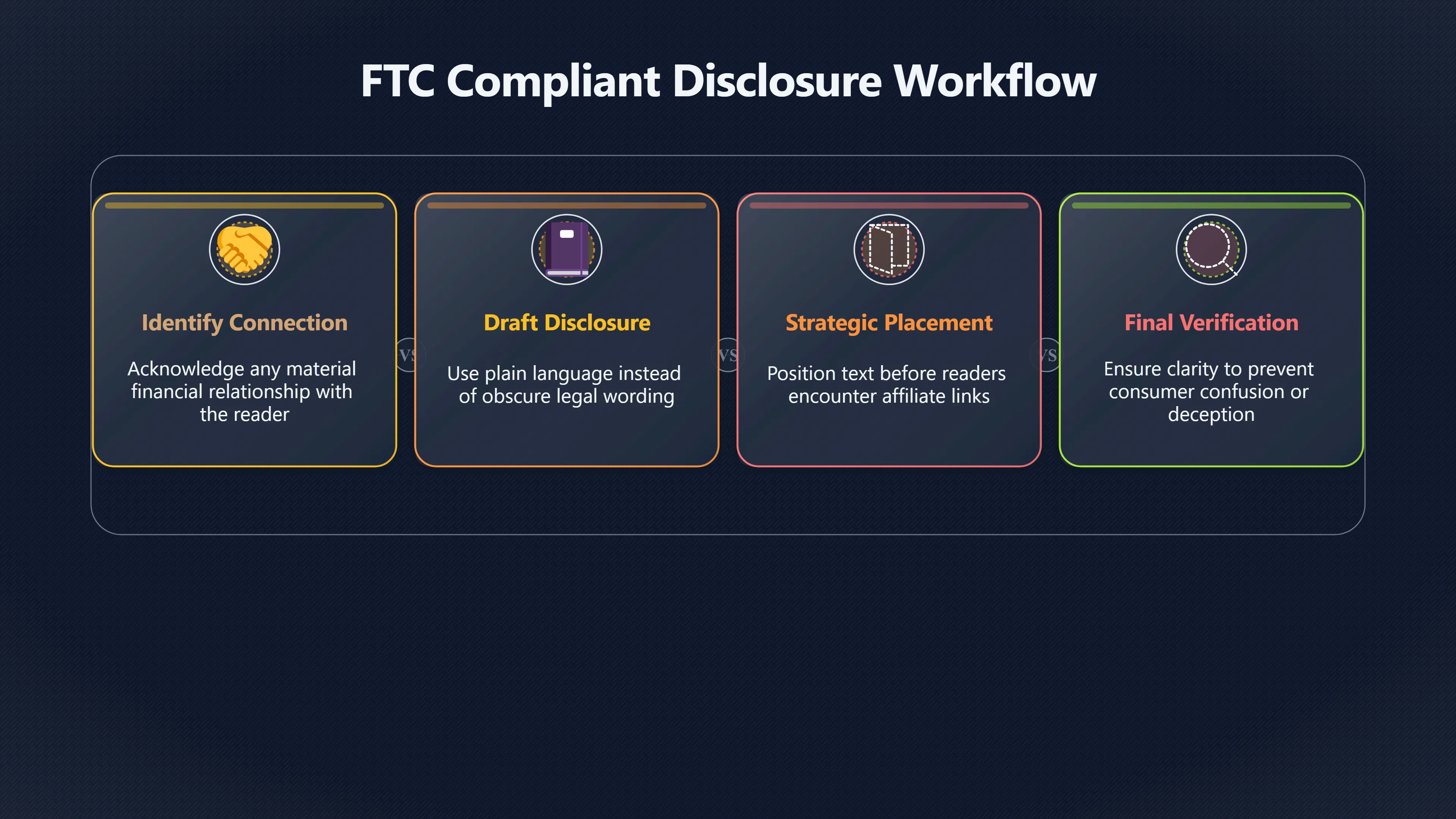
Readers quickly recognise whether recommendations are based on genuine judgement or whether every paragraph exists to generate clicks. Transparency about affiliate relationships supports this trust rather than weakening it. Regulatory guidance also requires clear disclosure whenever affiliate links create a financial relationship with the publisher. Disclosures should appear before or alongside relevant links using straightforward language rather than obscure legal wording.[Federal Trade Commission+2SEQ Legal]ftc.govIs “commissionable link” a goodFederal Trade CommissionFTC's Endorsement Guides: What People Are AskingSeptember 7, 2017 — 29 Jun 2023 — “Paid link” right next to an af…
An editorial voice therefore depends on three connected principles:
- explain before recommending
- compare before promoting
- disclose before readers click[elegantthemes.com]elegantthemes.comGuide for Affiliate Endorsements and Appropriate DisclosureThe Federal Trade Commission requires that affiliates disclose to their reader…
Decision-Help Emails That Build Trust
The strongest affiliate newsletters reduce uncertainty instead of increasing urgency.
Rather than sending “Top Deals This Week”, an editorial email could answer questions such as:
- Which espresso machine suits small kitchens?
- Is it worth paying more for the premium model?
- What changed in this year’s version?
- Who should avoid buying altogether?
The affiliate links appear after the explanation rather than replacing it.
Useful editorial formats include:
Editorial formatReader benefitSide-by-side comparisonClarifies trade-offs instead of declaring one winnerBuying mistake analysisHelps readers avoid expensive errors”What I would buy today” updateExplains changing recommendations as products evolveLong-term ownership lessonsShares experience beyond initial impressionsFrequently asked questionsAddresses objections before purchase
This style makes recommendations feel earned because the commercial link follows demonstrated expertise.
Timely Buying Prompts That Revive Older Guides
Editorial newsletters do not need entirely new content every week. One of their strengths is reconnecting readers with existing evergreen buying guides at moments when those guides become relevant again.
Examples include:
- seasonal gardening equipment before spring
- travel accessories before school holidays
- tax software before filing deadlines
- outdoor clothing before winter
- home office upgrades during major sales events
Instead of saying “Buy this now”, the email can explain why the timing matters.
For example:
Prices on several cordless lawn mowers have fallen compared with early spring. I’ve updated the comparison table with battery runtime tests and identified the two models that still represent good value after the discounts.
The newsletter becomes an editorial update rather than an advertisement directing readers to old content.
Because the destination guide already contains deeper reviews and comparisons, the email remains concise while encouraging meaningful repeat visits to the website.
Curated Recommendations Without Link Stuffing
One of the quickest ways for an affiliate newsletter to resemble advertising is excessive linking.
Large blocks containing dozens of products create several problems:
- readers struggle to identify the genuinely recommended options
- every recommendation appears equally important
- trust declines because little editorial judgement is visible
- click fatigue develops as every sentence contains a commercial link
Editorial newsletters instead rely on selective curation.
A practical structure might include:
- One central buying question.
- Two or three carefully explained recommendations.
- One link to a detailed comparison guide.
- Optional secondary resources for readers with specialised needs.
The scarcity of recommendations actually increases credibility. Readers can see that products were chosen because they solve different needs rather than because every affiliate opportunity deserved inclusion.
Editorial Independence Makes Recommendations More Believable
Readers expect experts to acknowledge weaknesses.
An editorial newsletter therefore benefits from statements such as:
- this year’s update is not worth upgrading from last year’s model
- the cheapest option performs surprisingly well
- a popular product is difficult to recommend because customer support has deteriorated
- most readers should wait for seasonal discounts
These conclusions occasionally reduce immediate affiliate revenue but often strengthen long-term subscriber confidence.
Independent criticism signals that recommendations are based on reader outcomes rather than commission rates. That distinction is increasingly important as consumers become more aware of affiliate marketing practices.

Transparency Strengthens Rather Than Weakens Credibility
Some publishers worry that prominent affiliate disclosures discourage clicks. Research and regulatory guidance instead suggest that clear explanations help readers understand the commercial relationship while reducing the likelihood of deception or confusion. The most effective disclosures use plain language and appear before readers encounter affiliate links rather than being hidden elsewhere in the email.[Federal Trade Commission+2SEQ Legal]ftc.govIs “commissionable link” a goodFederal Trade CommissionFTC's Endorsement Guides: What People Are AskingSeptember 7, 2017 — 29 Jun 2023 — “Paid link” right next to an af…
A concise disclosure can comfortably fit an editorial tone:
This email contains affiliate links. If you choose to buy through them, I may earn a commission at no additional cost to you. Recommendations remain based on my independent evaluation.
The disclosure becomes part of the publication’s editorial standards instead of an awkward legal interruption.
Signs an Affiliate Newsletter Is Becoming Too Promotional
Even experienced publishers gradually drift towards sales-heavy emails. Warning signs include:
- every email centres on discounts rather than buying advice
- identical products appear repeatedly without new context
- little original opinion accompanies recommendations
- urgency is used more often than explanation
- readers receive more links than insight
- older subscribers rarely reply because the emails no longer encourage conversation
Editorial newsletters remain valuable even when subscribers are not immediately buying. They educate readers, explain changing markets, revisit previous recommendations when circumstances change and occasionally recommend purchasing nothing at all.
That balance is precisely what makes future affiliate recommendations more persuasive. When readers trust the judgement behind the recommendation, the affiliate link becomes a useful reference rather than the reason the email exists.
Amazon book picks
Further Reading
Books and field guides related to How Affiliate Emails Avoid Feeling Like Ads. Use these as the next step if you want deeper reading beyond the article.
Everybody Writes
Helps readers write useful, engaging newsletters that prioritize value over promotion.
This Is Marketing
Emphasizes empathy, audience trust, and serving readers before selling.
Influence
Explains why trustworthy recommendations convert better than aggressive sales tactics.
eBay marketplace picks
Marketplace Samples
Live-tested eBay searches with available results related to this page.



Endnotes
1.
Source: ftc.gov
Title: Is “commissionable link” a good
Source snippet
Federal Trade CommissionFTC's Endorsement Guides: What People Are AskingSeptember 7, 2017 — 29 Jun 2023 — “Paid link” right next to an af...
Published: September 7, 2017
2.
Source: seqlegal.com
Title: affiliate marketing laws
Link:https://seqlegal.com/digital-marketing-laws/affiliate-marketing-laws/
Source snippet
Where email newsletters or marketing emails contain affiliate links, the affiliate relationship should be disclosed within the email itse...
Additional References
4.
Source: elegantthemes.com
Link:https://www.elegantthemes.com/policy/disclosure/
Source snippet
Guide for Affiliate Endorsements and Appropriate DisclosureThe Federal Trade Commission requires that affiliates disclose to their reader...
5.
Source: postaffiliatepro.com
Link:https://www.postaffiliatepro.com/blog/how-to-write-affiliate-disclaimer/
Source snippet
Write an Affiliate Disclaimer: Compliance GuideThe FTC's Endorsement Guides specifically state that any material connection between an en...
6.
Source: youtube.com
Link:https://www.youtube.com/watch?v=TpYEmQ9njyk
Source snippet
New FTC Guidelines For Affiliate & Influencer MarketerS Must...New FTC Guidelines For Affiliate & Influencer MarketerS Must Watch Before...
7.
Source: craftindustryalliance.org
Title: Newsletters that include affiliate links ・ not all
Link:https://craftindustryalliance.org/five-common-mistakes-involving-ftc-disclosures-for-affiliates-and-how-to-avoid-them/
Source snippet
5 Common Mistakes Involving FTC Disclosures for...24 Jun 2024 — Your affiliate disclosures should be close to any affiliate links, not o...
8.
Source: help.raptive.com
Title: 26147443891483 Guide to Affiliate Disclosures
Link:https://help.raptive.com/hc/en-us/articles/26147443891483-Guide-to-Affiliate-Disclosures
Source snippet
to Affiliate Disclosures26 Jun 2024 — In each article or post that contains affiliate links, you must state that there are affiliate link...
9.
Source: youtube.com
Title: 10 Powerful Tips to Write a Newsletter People Actually Read
Link:https://www.youtube.com/watch?v=16O3t1La3fE
Source snippet
This guide on writing a newsletter people actually read covers how to inject personality, stories, and editorial value to make emails hig...
10.
Source: partnercentric.com
Title: how to properly disclose ftc endorsements
Link:https://partnercentric.com/blog/how-to-properly-disclose-ftc-endorsements/
Source snippet
17 Jun 2024 — We wanted to outline the essential steps for proper FTC disclosure and provide recommendations for e-commerce sites and inf...
11.
Source: postaffiliatepro.com
Title: Do I Have to Disclose Affiliate Links?
Link:https://www.postaffiliatepro.com/faq/do-i-have-to-disclose-affiliate-links/
Source snippet
Legal Requirements...While there is no universal legal requirement to disclose affiliate links, the FTC and most affiliate programs requ...
12.
Source: stalirov.lawyer
Title: ftc affiliate marketing compliance
Link:https://stalirov.lawyer/en/posts/ftc-affiliate-marketing-compliance
Source snippet
FTC Affiliate Marketing & Compliance: Disclosure Rules...7 May 2025 — Emails: Integrate the disclosure clearly within the body of the e...
Published: May 2025
13.
Source: tricia.me
Title: These assume that “Brand” is the advertiser name.Read more
Link:https://www.tricia.me/2023/07/10/affiliate-influencer-disclosure-cheat-sheet/
Source snippet
Affiliate and Influencer Disclosure Cheat Sheet - Tricia Meyer10 Jul 2023 — The FTC has given us three specific hashtags that are approve...
Topic Tree