Within Reviews
When Does a Product Flaw Matter?
A real con tells the reader when a flaw is harmless, annoying, costly, or serious enough to avoid the product.
On this page
- Token drawbacks versus decision changing flaws
- How to connect cons to evidence
- When one flaw should overturn a recommendation
Page outline Jump by section
Introduction
Readers do not trust affiliate product reviews because they contain a list of disadvantages. They trust them because the review explains which disadvantages genuinely change the buying decision. A meaningful con tells the reader whether a flaw is irrelevant, mildly inconvenient, expensive to live with, or serious enough to reject the product altogether. That distinction transforms a review from marketing copy into practical buying advice.
 For affiliate websites, this is more than good writing. Search guidance from Google encourages reviews that demonstrate genuine evaluation, compare products meaningfully and explain trade-offs from the user’s perspective, while advertising regulators expect affiliate recommendations to be honest and not misleading. A review that minimises significant weaknesses risks damaging both reader trust and long-term credibility.[Federal Trade Commission]ftc.govFederal Trade Commission FTC's Endorsement Guides: What People Are AskingFederal Trade CommissionFTC's Endorsement Guides: What People Are AskingSeptember 7, 2017 — 29 Jun 2023 — Here are answers to some of the…
Token drawbacks versus decision-changing flaws
Many weak affiliate reviews include “cons” purely because readers expect to see them. These token drawbacks are usually vague enough to apply to almost any product:
- “A little expensive.”
- “May not suit everyone.”
- “Limited colour options.”
- “Could have more features.”[GOV.UK]GOV.UKcma secures important changes from google to tackle fake reviewssecures important changes from Google to tackle fake…24 Jan 2025 — Google has agreed to make significant changes to its processes for…
None of these statements helps a buyer decide whether to spend money.
A meaningful drawback answers a different question:
“Will this flaw affect someone like me enough to choose another product?”
That shifts the review from describing the product to supporting a purchasing decision.
Consider the difference:
Token conDecision-changing conBattery life could be better.Battery drops from full to empty in around five hours during GPS tracking, making it unsuitable for full-day hiking without a power bank.Premium price.Costs 40% more than competing models but offers little measurable improvement for office users who only browse and edit documents.Heavy.Weighs over 16 kg, making it difficult for people in upstairs flats to carry regularly.Software takes time to learn.Basic tasks are easy, but creating automated reports requires upgrading to a higher subscription tier and learning a complex workflow.
The second column allows readers to picture their own situation instead of guessing what the reviewer meant.
How to connect cons to evidence
Readers become sceptical when drawbacks appear arbitrary or exaggerated. The strongest reviews explain how the reviewer reached the conclusion.
Rather than simply stating that something is poor, connect the criticism to observable evidence such as:
- repeated use over several weeks
- measurable testing
- side-by-side comparison with competitors
- photographs or video showing the issue
- manufacturer documentation where relevant
- widespread user reports that match the reviewer’s own experience
For example:
Instead of writing:
“The vacuum cleaner struggles on thick carpet.”
Explain why:
“During repeated cleaning tests on medium-pile carpet, pet hair required several slow passes to remove, while competing models removed most debris in one or two passes.”
The evidence matters because it allows readers to judge whether the criticism reflects normal use or an isolated complaint.
Google’s guidance for high-quality product reviews similarly encourages original measurements, comparisons and evidence that demonstrates genuine evaluation instead of repeating manufacturer specifications.[Federal Trade Commission]ftc.govFederal Trade Commission FTC's Endorsement Guides: What People Are AskingFederal Trade CommissionFTC's Endorsement Guides: What People Are AskingSeptember 7, 2017 — 29 Jun 2023 — Here are answers to some of the…
Explain who should care about the flaw
The same weakness can matter enormously to one buyer and not at all to another.
A trustworthy review makes this distinction explicit.
For example:
Poor battery life
- Serious for travellers.
- Minor for someone using the device at a desk.
Limited software integrations
- Serious for business users with automated workflows.
- Irrelevant for occasional home users.
High maintenance costs
- Important for buyers intending long-term ownership.
- Less significant for occasional seasonal use.
This approach avoids the common mistake of presenting every disadvantage as universally important.
Instead of treating flaws as absolute, explain the conditions under which they matter.
When one flaw should overturn a recommendation
Not every negative point deserves equal weight.
Sometimes a single weakness should completely change the verdict because it undermines the product’s primary purpose.
Examples include:
- a security camera with unreliable motion detection
- a waterproof jacket that leaks during prolonged rain
- accounting software that lacks required tax reporting features
- a mattress that develops deep sagging after only a short period of normal use
- a cordless lawn mower that cannot finish an average-sized lawn on one battery charge despite being marketed for that purpose
These are not merely imperfections. They affect the product’s core job.
When this happens, a trustworthy reviewer should say so directly rather than trying to balance the issue with a long list of positive features.
Readers often recognise when reviewers appear reluctant to issue a negative verdict because affiliate commissions create an incentive to recommend rather than reject products. Being willing to recommend an alternative instead of forcing a positive conclusion strengthens editorial credibility.
Avoid false balance
Some reviews feel artificially “fair” because every criticism is matched with praise, even when the criticism is much more important.
For example:
“The laptop overheats under sustained workloads, but the keyboard feels excellent.”
Those two points are not equivalent.
A reviewer should weigh flaws according to their practical consequences rather than ensuring equal numbers of positives and negatives.
Useful questions include:[khlaw.com]khlaw.comftc publishes updated endorsement guides18 Jul 2023 — The updated Endorsement Guides and companion FAQs, which include 40 new questions, are intended to provide more specific gu…
- Does the flaw prevent the product performing its main purpose?
- Does it significantly increase ownership costs?
- Is there an easy workaround?
- Does it affect only certain buyers?
- Would a competing product avoid the problem at a similar price?
The answers determine whether the drawback deserves a brief mention or should fundamentally alter the recommendation.

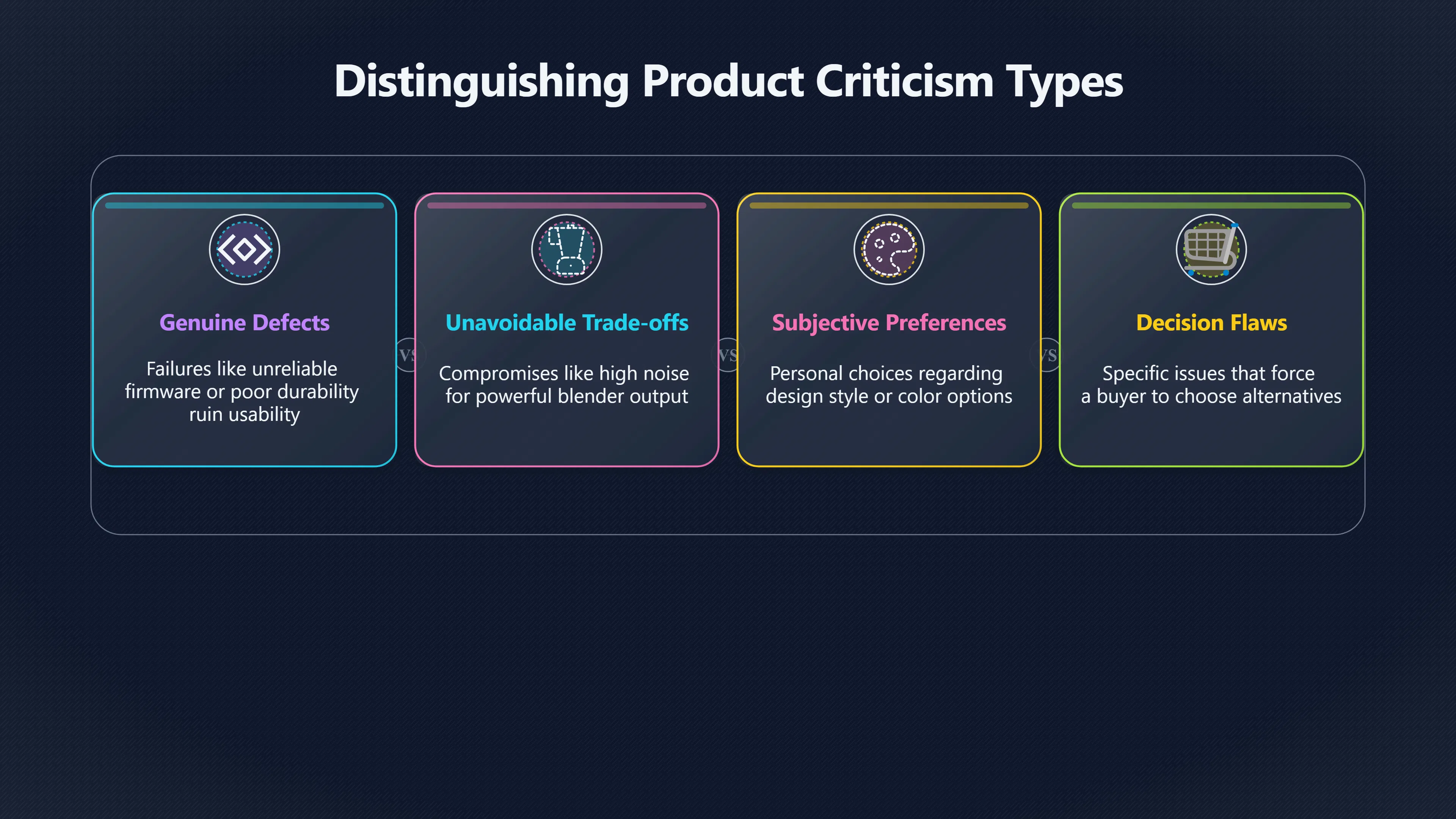
Distinguish between defects, trade-offs and preferences
Many reviews confuse three different kinds of criticism.
Defects are genuine failures.
Examples include unreliable firmware, poor durability or inaccurate measurements.
These normally reduce the overall recommendation.
Trade-offs are unavoidable compromises.
A lightweight laptop may sacrifice upgradeability.
A powerful blender may produce more noise.
Neither automatically makes the product worse.
Preferences depend entirely on the user.
Examples include:
- keyboard feel
- design style
- colour choices
- operating system layout
Presenting personal preferences as objective faults weakens credibility because readers recognise that reasonable people may disagree.
Strong affiliate reviews acknowledge uncertainty
Some weaknesses appear only after months of ownership or under unusual conditions.
Rather than overstating certainty, trustworthy reviews explain the available evidence.
For example:
“After three weeks of testing we saw no durability problems, although several long-term owners report hinge wear after roughly a year. We could not independently verify those reports, but they are consistent enough to monitor.”
This approach is more credible than either ignoring long-term concerns or presenting anecdotal reports as established fact.
The verdict should reflect the cons
The conclusion should be consistent with the evidence presented throughout the review.
If a product has only minor inconveniences, the recommendation can remain strong while explaining who those inconveniences affect.
If the review identifies a flaw that substantially limits performance, increases ownership costs or prevents the product fulfilling its intended purpose, the overall verdict should change accordingly—even if that means recommending a different product.
Readers remember reviews that help them avoid expensive mistakes far longer than reviews that simply reassure them to buy. For affiliate websites, that reputation for honest judgement is often more valuable than any individual commission because it encourages repeat visits, recommendations and lasting trust.
Amazon book picks
Further Reading
Books and field guides related to When Does a Product Flaw Matter?. Use these as the next step if you want deeper reading beyond the article.
Everybody Writes
Supports writing balanced reviews that clearly explain meaningful pros and cons.
Made to Stick
Encourages clear, concrete explanations that help readers judge product flaws.

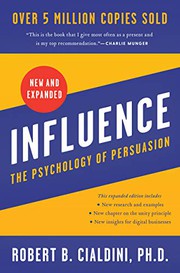
Influence, New and Expanded
Helps reviewers understand ethical persuasion and trustworthy recommendations.
eBay marketplace picks
Marketplace Samples
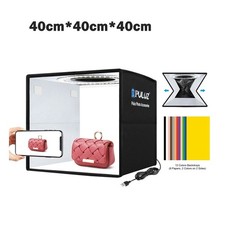
Example marketplace items related to this page. Use the search link to explore similar finds on eBay.


Endnotes
1.
Source: ftc.gov
Title: Federal Trade Commission FTC’s Endorsement Guides: What People Are Asking
Source snippet
Federal Trade CommissionFTC's Endorsement Guides: What People Are AskingSeptember 7, 2017 — 29 Jun 2023 — Here are answers to some of the...
Published: September 7, 2017
Source snippet
Federal Trade CommissionEndorsements, Influencers, and ReviewsGet plain language guidance from the FTC related to reviews, social media i...
3.
Source: GOV.UK
Title: cma secures important changes from google to tackle fake reviews
Link:https://www.gov.uk/government/news/cma-secures-important-changes-from-google-to-tackle-fake-reviews
Source snippet
secures important changes from Google to tackle fake...24 Jan 2025 — Google has agreed to make significant changes to its processes for...
4.
Source: ftc.gov
Title: federal trade commission announces final rule banning fake reviews testimonials
Link:https://www.ftc.gov/news-events/news/press-releases/2024/08/federal-trade-commission-announces-final-rule-banning-fake-reviews-testimonials
Source snippet
Federal Trade Commission Announces Final Rule Banning...14 Aug 2024 — The Federal Trade Commission today announced a final rule that wil...
5.
Source: katten.com
Link:https://katten.com/federal-trade-commission-[updates
Source snippet
Federal Trade Commission Updates Endorsement Guides...5 Jul 2023 — In the updated Guides and related compendium, the FTC expounds on var...
Additional References
6.
Source: federalregister.gov
Title: guides concerning the use of endorsements and testimonials in advertising
Link:https://www.federalregister.gov/documents/2023/07/26/2023-14795/guides-concerning-the-use-of-endorsements-and-testimonials-in-advertising
Source snippet
Guides Concerning the Use of Endorsements and...26 Jul 2023 — The Federal Trade Commission (FTC or Commission) is adopting revised Guide...
7.
Source: steptoe.com
Link:https://www.steptoe.com/en/news-publications/ftc-unveils-new-endorsement-guides-and-proposed-rule-on-consumer-reviews-what-your-business-needs-to-know-and-opportunities-to-shape-whats-next.html
Source snippet
FTC Unveils New Endorsement Guides and Proposed...11 Jul 2023 — The Endorsement Guides advise the public on advertising practices the Co...
8.
Source: brownejacobson.com
Title: cma investigation spurs google to crack down on fake reviews
Link:https://www.brownejacobson.com/insights/cma-investigation-spurs-google-to-crack-down-on-fake-reviews
Source snippet
CMA investigation spurs Google to crack down on fake...4 Feb 2025 — CMA's probe into Google boosts consumer protection by tackling fake...
9.
Source: osborneclarke.com
Title: cma puts fake reviews and endorsements uk under spotlight
Link:https://www.osborneclarke.com/insights/cma-puts-fake-reviews-and-endorsements-uk-under-spotlight
Source snippet
CMA puts fake reviews and endorsements in UK under...18 Sept 2025 — Regulator issues businesses with further guidance on fake reviews, h...
10.
Source: ecfr.gov
Link:https://www.ecfr.gov/current/title-16/chapter-I/subchapter-B/part-255
Source snippet
ndorsements and testimonials in advertising.Read more...
11.
Source: bakerbotts.com
Link:https://www.bakerbotts.com/thought-leadership/publications/2023/december/ftc-new-guidelines-for-endorsements-and-testimonials
Source snippet
ptive advertising by providing best practices surrounding the use of...Read more...
12.
Source: dwt.com
Title: ftc advertising endorsement and testimonial guides
Link:https://www.dwt.com/insights/2023/07/ftc-advertising-endorsement-and-testimonial-guides
Source snippet
In a One, Two, Three Punch, the FTC Issues Updated...10 Jul 2023 — The FTC issued (i) its final, updated Guides to the Use of Endorsemen...
13.
Source: yotpo.com
Link:https://www.yotpo.com/glossary/what-are-ftc-endorsement-guidelines/
Source snippet
esses and content creators understand how to talk about...Read more...
14.
Source: khlaw.com
Title: ftc publishes updated endorsement guides
Link:https://www.khlaw.com/insights/ftc-publishes-updated-endorsement-guides
Source snippet
18 Jul 2023 — The updated Endorsement Guides and companion FAQs, which include 40 new questions, are intended to provide more specific gu...
15.
Source: pmc.ncbi.nlm.nih.gov
Link:https://pmc.ncbi.nlm.nih.gov/articles/PMC8294234/
Source snippet
reviews on online platforms: perspectives from the US...by JMM Otero · 2021 · Cited by 41 — This paper aims (1) to analyse whether and h...
Topic Tree