Within Affiliate Pages
What Can Beginners Learn From Wirecutter?
Wirecutter shows how affiliate revenue can follow from rigorous testing, editorial standards, and reader trust.

On this page
- Testing as editorial value
- Trust before commission
- Lessons smaller sites can adapt
Page outline Jump by section
Introduction
Wirecutter is the clearest modern example of affiliate review publishing done as journalism rather than as a thin commission engine. Its lesson for affiliate-link websites is not “copy its scale”, but “copy the order of operations”: build reader trust first, make recommendations through repeatable testing, separate editorial judgement from commercial incentives, and treat the affiliate commission as the result of usefulness rather than the purpose of the page.
Founded by Brian Lam in 2011 and later bought by The New York Times for a reported sum of more than $30 million, Wirecutter showed that product guidance could become a serious media business when readers believed the recommendations saved them time, reduced risk, and were not simply paid placements. Poynter described its appeal to the Times partly in commercial terms: Wirecutter made most of its money from affiliate-link fees at a time when publishers were searching for revenue beyond advertising.[Poynter]poynter.orgwhy the new york times is buying the wirecutter for 30 millionwhy the new york times is buying the wirecutter for 30 million
For beginners building websites containing affiliate links, Wirecutter is best understood as a high-end case study. It proves that affiliate revenue can support editorial work, but it also shows why durable affiliate sites are expensive in time, expertise, and credibility.
Why Wirecutter changed the affiliate-site playbook
Before Wirecutter became part of The New York Times, many affiliate sites followed a familiar pattern: target a buying keyword, summarise products from retailer pages, add tracked links, and optimise for search traffic. Wirecutter’s original difference was that it framed the product page as a reader service. Instead of listing dozens of options, it usually tried to answer the practical question a buyer actually had: “What should I buy, and why?”
That sounds simple, but it changed the reader experience. A conventional affiliate page often leaves the reader comparing tables, star ratings, and vague pros and cons. Wirecutter made the choice itself, while explaining its reasoning. In an interview-era summary of Brian Lam’s model, the site was described as having no venture-capital funding and no advertising-dependent media treadmill, with affiliate income attached to a site that readers used because it was concise, useful, and research-led.[Observer]observer.comMeet the Man Who Rejected Ads and Still Runs a ProfitableMeet the Man Who Rejected Ads and Still Runs a Profitable
The New York Times acquisition mattered because it signalled that affiliate commerce was no longer only a blogger side hustle or a search-engine tactic. A major news company saw product-review journalism as a revenue line that could sit alongside subscriptions and advertising. The Times’ own 2023 annual report later listed Wirecutter affiliate referrals as part of “other revenues”, and said that other revenue increased 13.8% year on year partly because of continued strength in Wirecutter affiliate referral revenues.[s23.q4cdn.com]s23.q4cdn.comthe new york times company 2023 annual reportthe new york times company 2023 annual report
The deeper lesson is that Wirecutter monetised decision fatigue. It did not merely say, “Here are products you can buy.” It said, in effect, “We have done the annoying part for you.” That is the editorial value.

Testing as editorial value
Wirecutter’s most important contribution to affiliate publishing is the idea that testing is not decoration; it is the product. A review page becomes more defensible when it explains how the reviewer chose contenders, what was tested, what failed, what trade-offs mattered, and why the recommended product is not necessarily the most expensive or most heavily promoted.
Columbia Journalism Review captured the scale of this approach in a 2023 piece on product-review verticals, noting that a Wirecutter air purifier guide took months to complete and ran to around 22,000 words, including detailed analysis such as ozone concerns and durability in a household setting. It also described these guides as “living documents”, updated as products and testing methods change.[cjr.org]cjr.orgUnder ReviewUnder Review
That “living document” model is especially relevant to affiliate sites. A buying guide is not like a news article that expires after publication. Products go out of stock, prices change, models are discontinued, retailers alter warranties, and user complaints accumulate. A serious affiliate review site therefore has to maintain pages, not just publish them.
For a smaller site, the principle is adaptable even without a lab. The point is not to imitate Wirecutter’s staff size, but to create evidence a reader cannot get from a manufacturer’s description. That can include:
- testing a product in a real home, office, garden, studio, or workshop;
- photographing flaws as well as attractive features;
- explaining who should not buy the item;
- comparing the product with cheaper, older, or easier-to-repair alternatives;
- updating the page when long-term use changes the verdict.
The commercial value comes from the trust created by that labour. A reader who believes the testing is real is more likely to click the buying link, return for future decisions, and recommend the site to others.
Trust before commission
Affiliate marketing creates an obvious conflict: the publisher earns money when a reader buys. Wirecutter’s model tries to reduce that conflict through disclosure, separation of editorial and commerce roles, and a reputation for leaving money on the table when a recommendation does not serve the reader.
That separation is not a cosmetic detail. Columbia Journalism Review quoted Wirecutter leadership saying that writers and editors should not make decisions while knowing whether the publication has a monetary relationship with a business partner. AdExchanger reported a similar principle after the Times acquisition: the organisation was willing to leave money on the table if that was the right outcome for the reader.[cjr.org]cjr.orgUnder ReviewUnder Review
This matters because disclosure alone is a low bar. Regulators care about whether readers understand when a financial relationship exists. The US Federal Trade Commission says endorsement relationships need clear disclosure, and its guidance warns that vague labels such as “affiliate link” may not be enough because consumers may not understand that the publisher earns money from purchases.[Federal Trade Commission]ftc.govOpen source on ftc.gov.
UK guidance points in the same direction. The Advertising Standards Authority says affiliate content can appear alongside genuinely editorial material, but the parts containing affiliate links or brand promotion may fall under advertising rules and need to be identifiable as such.[ASA]asa.org.ukaffiliate marketingaffiliate marketing
For an affiliate website, this means trust has two layers. The first is legal and visible: make the commercial relationship clear. The second is editorial and structural: build a process that makes it believable that commissions do not decide the ranking. Wirecutter’s importance lies in that second layer.

The business model is powerful but fragile
Wirecutter’s history shows why affiliate review journalism is attractive to publishers. It can monetise readers at the moment they are close to buying, rather than relying only on display advertising or general subscriptions. During the 2016 acquisition coverage, Poynter noted that Wirecutter’s affiliate model was part of a wider publisher search for new digital revenue streams.[Poynter]poynter.orgwhy the new york times is buying the wirecutter for 30 millionwhy the new york times is buying the wirecutter for 30 million
The model also scales well when a trusted recommendation ranks in search results for high-intent queries. Someone searching for the best air purifier, standing desk, coffee grinder, or noise-cancelling headphones is not browsing casually; they may be ready to spend. A trusted page at that moment can generate meaningful revenue.
But the same model has weaknesses. First, it depends heavily on platforms: search engines, retailer affiliate programmes, and reader habits. Second, it is vulnerable to suspicion. If readers start to believe recommendations are shaped by commissions, the whole asset weakens. Third, genuine testing is labour-intensive. Wirecutter’s Black Friday and Cyber Monday coverage illustrates the operational burden: AdExchanger reported that Wirecutter had more than 60 people involved and reduced a pool of 78,000 deals to 455 picks for its deals page.[AdExchanger]adexchanger.comwirecutter plots affiliate future wing nyt parent companywirecutter plots affiliate future wing nyt parent company
The New York Times later added subscriptions to Wirecutter, showing that even a strong affiliate model may be combined with direct reader revenue. Nieman Lab reported in 2021 that Wirecutter introduced a subscription priced at $5 a month or $40 a year, while still being included in Times all-access digital subscriptions.[Nieman Lab]niemanlab.orgOpen source on niemanlab.org.
That shift is important for smaller publishers to understand. Affiliate income can be valuable, but it should not be treated as invulnerable. A resilient review site may eventually combine affiliate revenue with newsletters, memberships, sponsorships, paid tools, or other reader-supported products — but only if trust is strong enough to carry those extensions.
Where the model differs from ordinary product content
Wirecutter is often compared with Consumer Reports, shopping magazines, review blogs, and commerce verticals inside news organisations. The comparison is useful because it shows what review journalism is trying to balance.
Consumer Reports has historically relied on subscriptions, laboratory testing, and a reputation for independence from advertising. Commerce sites such as Wirecutter use affiliate links, but try to preserve editorial credibility through testing and process. CJR noted that Consumer Reports has its own real-world testing and rating system, while also showing that newer recommendation sites have turned household product inspection into a highly systematised form of digital publishing.[cjr.org]cjr.orgUnder ReviewUnder Review
The difference for affiliate-site builders is practical. A thin affiliate post asks, “Which products can I rank for and monetise?” A review-journalism page asks, “What decision can I help a reader make better than they could alone?” That shift changes everything: product selection, testing method, update schedule, disclosure language, page design, and even which products are worth covering.
It also changes the relationship with failure. A strong review site can say a popular product is not worth buying, that the cheapest option is good enough, or that most readers should wait. Those conclusions may reduce short-term commissions, but they increase long-term credibility.
What smaller sites can adapt from Wirecutter
Beginners do not need a Wirecutter-sized operation, but they can borrow several principles.
Choose narrower categories than Wirecutter. A small site should not try to review everything from headphones to mattresses. It has a better chance in a defined niche where first-hand knowledge is credible: home coffee equipment, accessible gardening tools, cycling luggage, budget music-production gear, pet travel products, or software for a specific profession.
Show the work. A page should explain how products were selected, what was tested, how long testing lasted, and what counted as failure. Readers do not need theatrical “lab” language, but they do need proof that the writer did more than rearrange retailer descriptions.
Separate judgement from monetisation. Even a one-person site can create rules: choose the recommendation first, add affiliate links later, include non-affiliate retailers when they are best for the reader, and never rank products by commission rate.
Update deliberately. Old recommendations can become misleading. A smaller site can build trust by adding update notes, stock checks, price warnings, long-term testing results, and replacement picks when products change.
Write for the buyer’s anxiety, not only the keyword. Wirecutter’s best pages work because they reduce uncertainty. A beginner can do the same by addressing fit, maintenance, returns, durability, repairability, compatibility, safety, or common disappointments.
Say who should not buy. This is one of the easiest ways to stand apart from generic affiliate content. Honest exclusions make recommendations more believable.
These habits also align with the broader regulatory and platform environment. Research on affiliate marketing disclosures has repeatedly found that many creators fail to disclose commercial relationships clearly; one empirical study of YouTube and Pinterest found that only about a tenth of affiliate content contained disclosures, and that short, unclear disclosures were poorly understood by users.[arXiv]arxiv.orgOpen source on arxiv.org.

The beginner’s real takeaway
Wirecutter’s model is inspiring, but it is not a shortcut. It shows that affiliate revenue can support serious editorial work, yet it also shows that the money arrives after credibility, not before it. The asset is not the affiliate link itself. The asset is the reader’s belief that the site is on their side.
For a beginner, the useful goal is not to become “the next Wirecutter”. It is to apply the review-journalism mindset at a manageable scale: test fewer products more honestly, publish fewer pages with more evidence, explain trade-offs clearly, and make the commercial relationship visible without letting it drive the recommendation.
In affiliate publishing, Wirecutter’s central lesson is simple: the commission is strongest when it looks like a by-product of good advice.
Amazon book picks
Further Reading
Books and field guides related to What Can Beginners Learn From Wirecutter?. Use these as the next step if you want deeper reading beyond the article.
Everybody Writes
Teaches clear, reader-focused publishing practices that align with high-quality review content.
The Everything Store: Jeff Bezos and the Age of Amazon
Provides essential context for understanding the retail platform that underpins much affiliate marketing.
Made to Stick
Helps affiliate publishers communicate recommendations clearly and memorably through strong editorial structure.
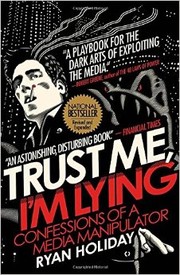
Trust Me, I'm Lying
Highlights the importance of credibility and editorial integrity, reinforcing Wirecutter's trust-first model.
eBay marketplace picks
Marketplace Samples
Live-tested eBay searches with available results related to this page.


Endnotes
1.
Source: poynter.org
Title: why the new york times is buying the wirecutter for 30 million
Link:https://www.poynter.org/business-work/2016/why-the-new-york-times-is-buying-the-wirecutter-for-30-million/
2.
Source: observer.com
Title: Meet the Man Who Rejected Ads and Still Runs a Profitable
Link:https://observer.com/2016/04/meet-the-man-who-rejected-advertising-and-still-runs-a-profitable-media-site/
3.
Source: s23.q4cdn.com
Title: the new york times company 2023 annual report
Link:https://s23.q4cdn.com/152113917/files/doc_events/2024/Apr/24/the-new-york-times-company-2023-annual-report.pdf
4.
Source: cjr.org
Title: Under Review
Link:https://www.cjr.org/business_of_news/product-review-verticals-strategist-wirecutter.php
5.
Source: adexchanger.com
Title: wirecutter plots affiliate future wing nyt parent company
Link:https://www.adexchanger.com/publishers/wirecutter-plots-affiliate-future-wing-nyt-parent-company/
6.
Source: asa.org.uk
Title: affiliate marketing
Link:https://www.asa.org.uk/advice-online/affiliate-marketing.html
7.
Source: arxiv.org
Link:https://arxiv.org/abs/1803.08488
8.
Source: arxiv.org
Link:https://arxiv.org/abs/1809.00620
9.
Source: youtube.com
Link:https://www.youtube.com/watch?v=rjvIph3Sx4c
10.
Source: youtube.com
Title: Affiliate Site Case Study
Link:https://www.youtube.com/watch?v=a9CT_Vd_118
11.
Source: youtube.com
Link:https://www.youtube.com/watch?v=ZdKNgX-C5Lg
12.
Source: youtube.com
Title: World’s Largest Affiliate Site Review: Wirecutter
Link:https://www.youtube.com/watch?v=i9UjSms_Fsc
Source snippet
Micro-Niche Affiliate Strategy: How I Beat Wirecutter at Their Own Game...
13.
Source: youtube.com
Title: Micro-Niche Affiliate Strategy: How I Beat Wirecutter at Their Own Game
Link:https://www.youtube.com/watch?v=Wal1KKI-9eE
Source snippet
[Amazon]({{ 'amazon/' | relative_url }}) Affiliate Marketing for Beginners - The Wirecutter...
14.
Source: youtube.com
Title: Amazon Affiliate Marketing for Beginners
Link:https://www.youtube.com/watch?v=QHu4-ag0-nA
Source snippet
Introducing: The Wirecutter Show...
15.
Source: youtube.com
Title: Introducing: The Wirecutter Show
Link:https://www.youtube.com/watch?v=Ocr5K91ZT8k
Source snippet
"Wirecutter" business model product reviews This Wirecutter Expert Cleans (Almost) Everything with Dish Soap New York Times Podcasts...
16.
Source: niemanlab.org
Link:https://www.niemanlab.org/2021/08/wirecutter-which-makes-money-when-you-shop-is-going-behind-the-new-york-times-paywall/
18.
Source: ftc.gov
Title: s endorsement guides what people are asking
19.
Source: news.ycombinator.com
Link:https://news.ycombinator.com/item?id=37272214
20.
Source: news.ycombinator.com
Link:https://news.ycombinator.com/item?id=28409586
21.
Source: ftc.gov
Link:https://www.ftc.gov/system/files/ftc_gov/pdf/p204500_endorsement_guides_in_2023.pdf
22.
Source: niemanlab.org
Link:https://www.niemanlab.org/2016/10/the-new-york-times-is-buying-the-gadget-and-technology-review-site-the-wirecutter-for-30-million/
23.
Source: niemanlab.org
Title: wirecutters union staffers will strike from thanksgiving through cyber monday
Link:https://www.niemanlab.org/2021/11/wirecutters-union-staffers-will-strike-from-thanksgiving-through-cyber-monday/
24.
Source: asa.org.uk
Title: get yourself affiliated with the rules on affiliate marketing
Link:https://www.asa.org.uk/news/get-yourself-affiliated-with-the-rules-on-affiliate-marketing.html
25.
Source: asa.org.uk
Link:https://www.asa.org.uk/static/uploaded/3af39c72-76e1-4a59-b2b47e81a034cd1d.pdf
26.
Source: asa.org.uk
Title: remit social media
Link:https://www.asa.org.uk/advice-online/remit-social-media.html
27.
Source: Wikipedia
Title: Brian Lam
Link:https://en.wikipedia.org/wiki/Brian_Lam
28.
Source: bogleheads.org
Link:https://www.bogleheads.org/forum/viewtopic.php?t=357451
29.
Source: GOV.UK
Title: social media endorsements being transparent with your followers
Link:https://www.gov.uk/government/publications/social-media-endorsements-guidance-for-content-creators/social-media-endorsements-being-transparent-with-your-followers
30.
Source: forbes.com
Link:https://www.forbes.com/sites/edzitron/2012/06/25/wirecutter/
Additional References
31.
Source: mediapost.com
Link:https://www.mediapost.com/publications/article/366523/new-york-times-extends-paywall-strategy-to-wire.html?edition=
32.
Source: tsenta.com
Link:https://tsenta.com/jobs/the-new-york-times-director-licensing-nyt-wirecutter-e09e878c-0f1c-470f-a8cc-b9e428bb639c
33.
Source: medium.com
Link:https://medium.com/the-business-of-content/inside-the-new-york-timess-post-acquisition-strategy-for-wirecutter-f6123b5f285f
34.
Source: bebee.com
Link:https://bebee.com/us/jobs/operations-director-advertising-nyt-wirecutter-the-new-york-times-new-york-ny–theirstack-688762864
35.
Source: reddit.com
Link:https://www.reddit.com/r/Anticonsumption/comments/1pitgbz/opinion_on_nyt_wirecutter_and_alternative/
36.
Source: x.com
Link:https://x.com/ViperChill/status/1722275242239012999?lang=en
37.
Source: macsparky.com
Link:https://www.macsparky.com/blog/2016/10/2016-10-the-wirecutter-an-internet-success-story/
38.
Source: reddit.com
Link:https://www.reddit.com/r/juststart/comments/595kau/thoughts_on_nytimes_buying_wirecutter_for_30m/
39.
Source: blog.promise.legal
Link:https://blog.promise.legal/startup-central/ftc-endorsement-guides-for-startups-practical-disclosure-review-controls-built-for-global-scale/
40.
Source: job-boards.greenhouse.io
Link:https://job-boards.greenhouse.io/thenewyorktimes/jobs/4695487005
Topic Tree
Follow this branch
Parent topic
Affiliate PagesRelated pages 29
- Amazon Is Amazon Associates Still Good for Beginners?
- Appliances What Kitchen Appliance Reviews Often Miss
- Authority Can Expertise Beat Bigger Affiliate Sites?
- Baby Travel Why Baby Travel Gear Reviews Need More Trust
- Business Tools Can Small Business Software Be a Better Affiliate Niche?
- +24 more in sidebar