Within Thin Pages
Why Copied Product Copy Loses Trust
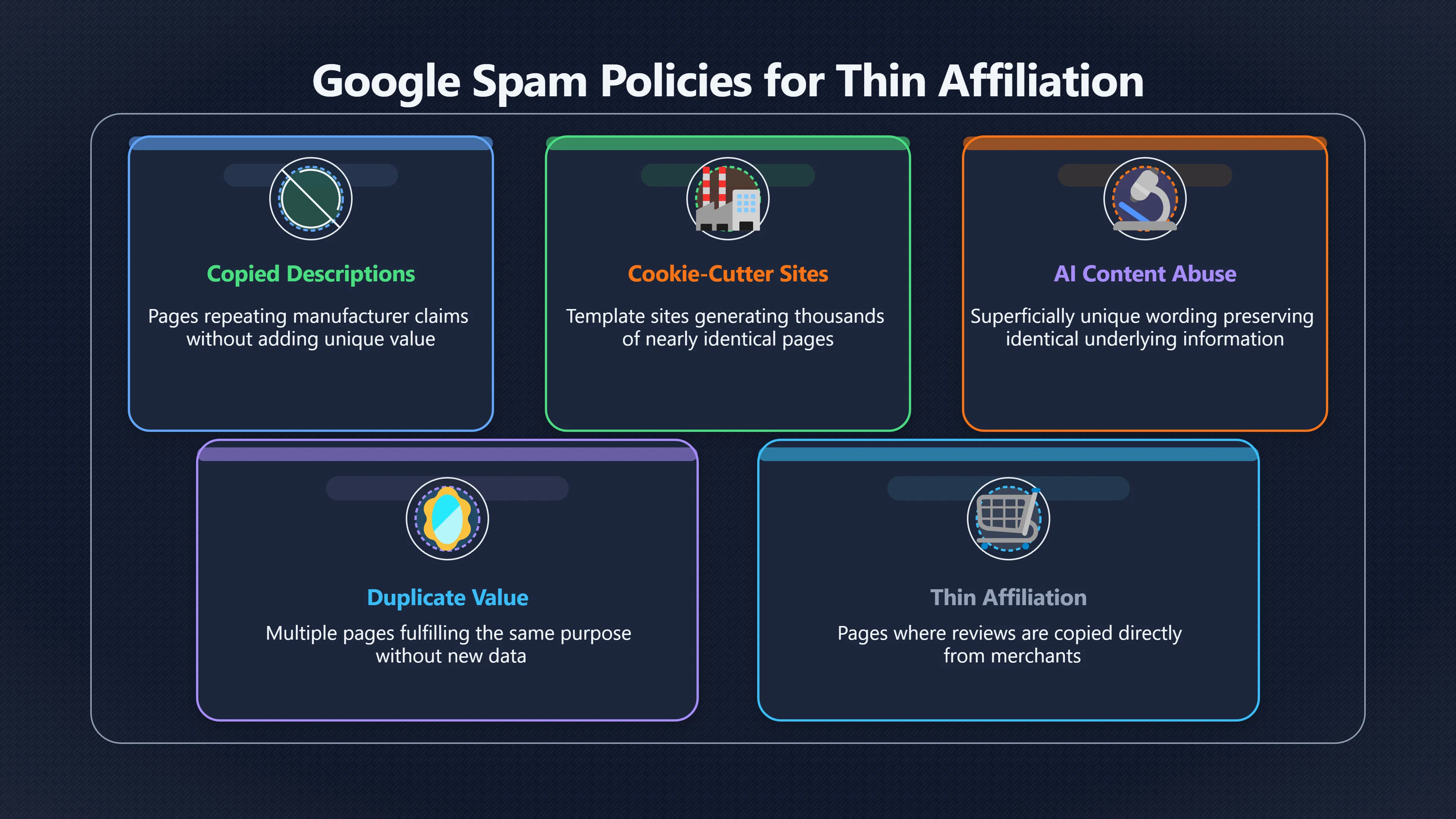
Copied product descriptions make affiliate pages replaceable because the merchant already answers the basic buying query better.
On this page
- What duplicate merchant copy looks like
- Why search results need a different answer
- How to replace copied claims with useful detail
Page outline Jump by section
Introduction
Copied merchant descriptions are one of the quickest ways to make an affiliate page replaceable. When a page repeats the manufacturer’s product summary, specifications, and marketing claims with only minor rewriting, it gives search engines little reason to rank it above the original merchant or another page that offers genuine insight. Google’s spam policies explicitly identify “thin affiliate” pages as those that copy product descriptions or reviews from merchants without adding original content or meaningful value, while also explaining that good affiliate sites contribute independent reviews, testing, comparisons, pricing information, or other useful features.[Google for Developers]developers.google.comGoogle for DevelopersSpam Policies for Google Web SearchThe spam policies detail the behaviors and tactics that can lead to a page or an…
 For anyone building websites that earn money through affiliate links, the problem is not simply duplicate wording. The deeper issue is duplicate usefulness. If the reader can obtain exactly the same answer from the manufacturer’s product page, the affiliate page becomes an unnecessary extra step in the search results.
What Duplicate Merchant Copy Looks Like
Copied merchant copy is often more subtle than a straightforward copy-and-paste job. Many affiliate pages lightly rewrite official descriptions while preserving exactly the same information and structure.
Typical signs include:
- Product introductions that closely mirror the manufacturer’s promotional language.
- Feature lists that simply repeat official specifications.
- Generic statements such as “excellent performance”, “premium quality”, or “perfect for beginners” without supporting evidence.
- Entire comparison tables built only from manufacturer data.
- Reviews that never describe actual use, limitations, or unexpected behaviour.
Although individual sentences may be reworded, the page answers precisely the same questions as the merchant listing. From the searcher’s perspective, the experience is repetitive rather than informative.
Google’s guidance focuses on this lack of additional value rather than on exact text matching. Its concern is that users should not encounter several near-identical results which all provide the same information while merely directing them towards affiliate links.[Google for Developers]developers.google.comGoogle for DevelopersSpam Policies for Google Web SearchThe spam policies detail the behaviors and tactics that can lead to a page or an…
Why Search Results Need a Different Answer
Search engines are not trying to eliminate affiliate websites. They are trying to avoid filling results pages with interchangeable pages.
Imagine someone searches for a specific coffee grinder.
The merchant already provides:
- official specifications
- dimensions
- motor power
- included accessories
- warranty details
- promotional photographs
If an affiliate page republishes those facts without adding anything distinctive, it competes against the original source using weaker authority.
A more useful affiliate page answers questions the merchant usually cannot answer honestly or completely, such as:
- Is the grinder much louder than expected?
- Does static cause coffee grounds to scatter?
- How easy is it to clean after several weeks?
- Which competing model performs better for espresso?
- Who should avoid buying it?
These are buying questions rather than selling questions. They introduce original judgement, making the page valuable even if the specifications are already widely available.
Google specifically cites original reviews, rigorous testing, meaningful comparisons, product navigation and additional pricing information as examples of value that differentiate worthwhile affiliate pages from thin affiliates.[Google for Developers]developers.google.comGoogle for DevelopersSpam Policies for Google Web SearchThe spam policies detail the behaviors and tactics that can lead to a page or an…

Duplicate Value Matters More Than Duplicate Words
Many publishers still worry primarily about “duplicate content” as though search engines only compare identical sentences.
Modern search quality systems assess something broader: whether multiple pages fulfil the same purpose without contributing anything new.
For affiliate sites this creates several risks.
First, dozens of publishers may receive identical manufacturer feeds containing descriptions, specifications and images.
Second, AI tools can produce superficially unique wording while preserving exactly the same underlying information.
Third, large template-based affiliate sites often generate hundreds or thousands of pages with nearly identical structure, differing only by product name.
Even if every paragraph is technically rewritten, readers still encounter essentially the same buying advice repeatedly. Google’s spam policies explicitly describe cookie-cutter affiliate sites that replicate similar content across domains or languages as creating a frustrating search experience.[Google for Developers]developers.google.comGoogle for DevelopersSpam Policies for Google Web SearchThe spam policies detail the behaviors and tactics that can lead to a page or an…
The practical lesson is that originality comes from information, evidence and judgement—not merely from changing vocabulary.
How to Replace Copied Claims with Useful Detail
The strongest affiliate pages begin where the merchant description ends.
Instead of repeating marketing claims, replace them with observations that require independent evaluation.
For example:
Merchant claimMore useful affiliate content“Long battery life”Average runtime measured during typical daily use, including which settings were enabled.”Comfortable design”Fit after several hours, pressure points, suitability for different head sizes or hand sizes.”Fast performance”Time taken to complete common real-world tasks compared with competing products.”Premium build quality”Materials that actually affect durability, repairability or maintenance.”Ideal for beginners”Specific explanation of which features make learning easier and where experienced users may find limitations.
These additions create information that cannot simply be copied from the manufacturer’s catalogue.
Even when first-hand testing is impossible, useful original material can still include:
- explaining trade-offs between competing products
- identifying which buyer profiles suit each option
- comparing warranty terms and long-term ownership costs
- highlighting compatibility issues
- interpreting technical specifications in plain language
- identifying situations where a cheaper alternative performs just as well
The goal is not to write more words but to reduce uncertainty for the buyer.
Why Independent Judgement Builds Trust
Merchant descriptions naturally emphasise strengths while minimising weaknesses.
Affiliate publishers who merely echo those claims become extensions of the manufacturer’s marketing.
Independent judgement changes the relationship with the reader because it introduces selective criticism alongside recommendations. A review that identifies genuine drawbacks is more credible than one that praises every feature equally. It also demonstrates that the publisher has evaluated the product rather than simply reformatted promotional material.
This is particularly important because affiliate commissions create an inherent commercial incentive. Honest discussion of limitations helps balance that incentive and gives readers reasons to trust recommendations despite the financial relationship.
The Practical Standard for Affiliate Pages
A useful test is to remove the affiliate links temporarily and ask whether the page would still deserve to exist.
If deleting the affiliate links leaves behind original research, practical comparisons, buyer guidance and evidence-based conclusions, the page probably provides independent value.
If removing the links leaves little beyond rewritten specifications and promotional claims, the page remains largely interchangeable with the merchant listing.
That distinction explains why copied product copy struggles in search. Search engines already have access to the original description. They reward pages that contribute something readers cannot obtain from the source itself, rather than multiplying versions of the same answer.[Google for Developers]developers.google.comGoogle for DevelopersSpam Policies for Google Web SearchThe spam policies detail the behaviors and tactics that can lead to a page or an…
Amazon book picks
Further Reading
Books and field guides related to Why Copied Product Copy Loses Trust. Use these as the next step if you want deeper reading beyond the article.
Everybody Writes
Shows how to create original, useful content instead of reusing marketing copy.
They Ask, You Answer
Encourages answering real customer questions with original expertise instead of recycled sales claims.
Content Chemistry
Focuses on creating differentiated, valuable web content that earns visibility.
The Copywriter's Handbook
Rating: 4.0/5 from 5 Google Books ratings
Teaches persuasive, original product copy rather than duplicated manufacturer descriptions.
eBay marketplace picks
Marketplace Samples
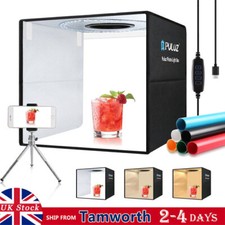
Example marketplace items related to this page. Use the search link to explore similar finds on eBay.

Endnotes
1.
Source: developers.google.com
Link:https://developers.google.com/search/docs/essentials/spam-policies
Source snippet
Google for DevelopersSpam Policies for Google Web SearchThe spam policies detail the behaviors and tactics that can lead to a page or an...
2.
Source: support.google.com
Title: duplicate product description plagiate
Link:https://support.google.com/webmasters/thread/163915793/duplicate-product-description-plagiate?hl=en
Source snippet
It does not have any sanction for if your text is copied. To...Read more...
Additional References
3.
Source: wildcatdigital.co.uk
Title: identifying thin duplicate and overlapping content to improve seo
Link:https://wildcatdigital.co.uk/blog/identifying-thin-duplicate-and-overlapping-content-to-improve-seo/
Source snippet
Identify Thin, Duplicate, & Overlapped Content17 Dec 2025 — Thin affiliation involves copying product descriptions and reviews directly f...
4.
Source: youtube.com
Link:http://www.youtube.com/watch?v=6IvuC7qKD6E
Source snippet
Copied manufacturer descriptions duplicate content seo ecommerce affiliate Duplicate Content and SEO: Will Google Penalize Me?...
5.
Source: bulkbase.ai
Title: understanding googles scaled content abuse policy
Link:https://bulkbase.ai/seo/understanding-googles-scaled-content-abuse-policy
Source snippet
Google Search Spam Policies: Scaled Content Abuse &...5 Jun 2025 — Thin or low-value pages: Minimal main content, boilerplate descriptio...
6.
Source: youtube.com
Link:http://www.youtube.com/watch?v=LgbOibxkEQw
Source snippet
3 Reasons Why Thin Content Is Destroying Your Google [Rankings]({{ 'rankings/' | relative_url }}) (And How to Bulk It Up Fast)...
7.
Source: gsqi.com
Title: a nightmare on affiliate street
Link:https://www.gsqi.com/marketing-blog/a-nightmare-on-affiliate-street/
Source snippet
How Google is picking off...24 Oct 2024 — Google's 'Site reputation abuse' spam policy. Their affiliate sections are getting obliterated...
8.
Source: keygrow.co
Title: do affiliate links hurt seo
Link:https://keygrow.co/blog/do-affiliate-links-hurt-seo
Source snippet
? The Real Risk17 Jun 2026 — Its spam policies define "thin affiliation" as pages where product descriptions and reviews "are copied dire...
9.
Source: youtube.com
Title: How to Double Website [Traffic]({{ ‘traffic/’ | relative_url }}) in Less Than 6 Months (e Commerce SEO Case Study)
Link:http://www.youtube.com/watch?v=DFK0xk8izpY
Source snippet
Tools for publishers (and understanding their benefits) | Sustainable Monetized Websites...
10.
Source: searchengineland.com
Title: Google’s spam update vs
Link:https://searchengineland.com/google-spam-update-ai-affiliate-sites-seo-experiment-470168
Source snippet
AI affiliate sites: An SEO...26 Feb 2026 — An experiment with AI affiliate sites shows how Google's spam systems treat low-trust, progra...
11.
Source: youtube.com
Link:http://www.youtube.com/watch?v=EBIbG3d0k9c
Source snippet
Duplicate Content and SEO: Will Google Penalize Me?...
12.
Source: facebook.com
Link:https://www.facebook.com/groups/DumbSEOQuestions/posts/25887016240906016/
Source snippet
ue to duplicate content without selected canonicals. I have a...
Topic Tree