Within Affiliate Pages
How Should Affiliate Sites Disclose Paid Links?
Clear affiliate disclosures protect readers and help avoid misleading commercial content.

On this page
- What readers need to know
- Disclosure placement and clarity
- Trust costs of hidden commissions
Page outline Jump by section
Introduction
Affiliate sites should disclose paid links in plain sight, in plain language, before a reader clicks. The core rule is simple: when a website may earn money because a reader follows a link, uses a code, or buys a recommended product, that commercial connection must be obvious enough for the reader to understand it while judging the recommendation. In the UK, the CAP Code requires marketing communications to be identifiable and to make commercial intent clear when it is not obvious; in the US, the FTC’s Endorsement Guides require “clear and conspicuous” disclosure of material connections that could affect how consumers assess an endorsement.[ASA]asa.org.ukaffiliate marketingOnline Affiliate Marketing22 Mar 2023 — The Code also states that marketing communications must not falsely claim or imply that the ma…
This matters because affiliate websites depend on trust. A disclosure is not just legal padding at the bottom of a page. It tells the reader, “This recommendation may earn us money, so judge it with that in mind.” Done well, it protects the reader, the publisher, and the merchant. Done badly, it turns product advice into disguised advertising.
What Readers Need to Know
A reader does not need a lecture on affiliate tracking, cookie windows, or commission rates. They do need to know the fact that could change how they interpret the page: the publisher may be paid if the reader clicks or buys. That is the “material connection” regulators care about. The FTC frames this broadly: if a connection between an endorser and a company might affect the weight or credibility people give to the endorsement, it should be disclosed.[Federal Trade Commission]ftc.govYou may also be liable ifFederal Trade CommissionFTC's Endorsement Guides: What People Are AskingSeptember 7, 2017 — 29 Jun 2023 — Advertisers shouldn't encourage…
For an affiliate website, the useful disclosure answers three practical questions:
- Is this link commercial? The reader should understand that at least some links are affiliate links.
- Who gets paid? The publisher, creator, or website may receive a commission.
- Does it change the reader’s price? Many sites add that the reader pays no extra, but this should not replace the main disclosure.
- Does the payment influence recommendations? The strongest sites say how they choose products and whether commissions affect rankings.
A clear example would be: “Some links on this page are affiliate links. If you buy through them, we may earn a commission at no extra cost to you.” For a review or comparison page, a stronger version might add: “We only recommend products we think are useful for the reader, and affiliate commissions do not decide our ratings.” That second sentence is not a legal cure-all, but it addresses the trust question readers actually have.
The point is not to make every article feel apologetic. Affiliate marketing is a legitimate revenue model. The problem begins when the page looks like independent editorial advice while hiding the fact that recommendations are also monetised. The ASA’s affiliate marketing guidance says that when someone signs up to promote a brand in return for payment based on clicks or purchases, references to that brand on their own website or social media are likely to fall within the CAP Code.[ASA]asa.org.ukaffiliate marketingOnline Affiliate Marketing22 Mar 2023 — The Code also states that marketing communications must not falsely claim or imply that the ma…
Disclosure Placement and Clarity
A disclosure works only if readers see it before it matters. A small statement hidden in the footer, behind a “disclosure policy” link, or after a long product list is unlikely to satisfy the underlying transparency principle, because the reader may already have clicked, trusted, or acted on the recommendation.
For affiliate websites, the safest placement is near the start of the page, before the first affiliate link or buying recommendation. On a “best coffee grinders” page, that means near the introduction, not beneath the tenth product card. On a product review, it should appear before the first call-to-action button. On a comparison table, it should be visible before or alongside the table, not only in sitewide terms.
The FTC’s updated Endorsement Guides emphasise that disclosure should be difficult to miss and easily understandable. The FTC has also warned that platform tools alone may not be enough if they do not make the commercial relationship clear in the context where the endorsement appears.[Federal Trade Commission]ftc.govFederal Trade Commission Revised FTC Endorsement GuidesFederal Trade CommissionRevised FTC Endorsement Guides…June 28, 2023 — 29 Jun 2023 — It adds specific guidance for influencers on when…
The UK position is similar in spirit. CAP guidance says affiliate marketing must be “obviously identifiable”, and the Code requires commercial intent to be clear when it is not apparent from context.[ASA]asa.org.ukaffiliate marketingOnline Affiliate Marketing22 Mar 2023 — The Code also states that marketing communications must not falsely claim or imply that the ma… The CMA’s guidance for content creators also warns that hidden ads or misleading practices may breach consumer protection law and can lead to substantial fines, while ASA non-compliance can lead to public naming.[GOV.UK]GOV.UKSocial media endorsements: guidance for content creatorsJanuary 23, 2019 — 3 Sept 2025 — If you use hidden ads or otherwise engage in misleading practices, you may be in breach of consumer prot…
Practical placement choices usually look like this:
- Article opening: Best for reviews, rankings, gift guides, and comparison pages.
- Near affiliate buttons: Useful for “Check price”, “Buy now”, “View deal”, or “Get quote” calls to action.
- Before email newsletter links: A newsletter containing affiliate links should not rely on a website disclosure the reader may never see.
- In social snippets that include affiliate links or codes: A platform bio disclosure is not enough if the commercial link appears in a specific post.
- On a full disclosure page as backup: Helpful for detail, but not a substitute for page-level disclosure.
Clarity is just as important as location. “Affiliate links may be present” is weaker than “We may earn a commission if you buy through links on this page.” Abbreviations such as “aff”, vague phrases such as “partner link”, or softened wording such as “we may be compensated for referrals” can be too obscure for a mainstream reader. The better test is: would a rushed reader immediately understand that the site may make money from the recommendation?
When the Whole Page Is an Ad
Affiliate disclosure can become complicated when a page mixes editorial judgement with affiliate monetisation. A single affiliate link in a broader article may not make every sentence an advert in the reader’s mind, but a page built around recommending linked products usually needs prominent labelling because the commercial purpose is central to the content.
The ASA has taken a strict view where affiliate links appear in editorial-style content and the commercial intent is not obvious. In commentary on ASA rulings involving news-style affiliate articles, legal analysts noted that the regulator treated unclear labelling as a problem for both publishers and brands, especially where readers could believe they were reading purely editorial content.[Lexology]lexology.comOpen source on lexology.com.
This is a common issue for affiliate sites because their most profitable pages often imitate familiar editorial formats: “best”, “top”, “reviewed”, “tested”, “deals”, “alternatives”, or “comparison”. Those formats are not inherently deceptive. They become risky when the commercial link between ranking, recommendation, and revenue is hidden.
A useful distinction is:
- Incidental affiliate link: A gardening article mentions a trowel and links to a retailer. A short disclosure before the link may be enough.
- Affiliate-driven recommendation page: A full “best trowels” article ranks products and uses buying buttons throughout. A prominent page-level disclosure is needed.
- Merchant-controlled content: If a brand has approval rights or pays for placement, the page may need stronger ad labelling, not merely an affiliate-link note.
- Hybrid editorial and affiliate content: If the publisher claims independence, it should explain how products are selected, tested, ranked, and monetised.
This is where reader transparency goes beyond minimum compliance. A site that explains its review process, product selection criteria, and monetisation model gives readers a reason to trust the page despite the commission.
Hidden Commissions Carry Real Trust Costs
The commercial risk of disclosure is often overstated. Some publishers fear that telling readers about affiliate links will reduce clicks. But the deeper risk is the opposite: if readers discover the commission relationship later, they may reassess the whole site as manipulative.
Research on affiliate disclosures shows why weak wording is not enough. A Princeton-led study of more than 500,000 YouTube videos and 2.1 million Pinterest pins found that only about one-tenth of affiliate marketing content contained any disclosure at all, and that users often failed to understand short, non-explanatory disclosures.[arXiv]arxiv.orgOpen source on arxiv.org. That finding is directly relevant to affiliate websites: a disclosure that technically exists but is too vague for ordinary readers does not achieve meaningful transparency.
More recent work on YouTube’s affiliate ecosystem found that affiliate links are widespread while disclosure compliance remains low, and suggested that platform-level standardised disclosure tools are associated with improved compliance.[arXiv]arxiv.orgOpen source on arxiv.org. The practical lesson for website owners is that disclosure should be built into the publishing system, not left to memory. Templates, product blocks, comparison tables, and review intros should make the disclosure routine.
Hidden commissions also sit within a wider pattern of online design that regulators call manipulative or “dark” commercial practice. The FTC has identified disguising ads to look like independent content and burying important terms as dark-pattern tactics that can mislead consumers.[Federal Trade Commission]ftc.govFederal Trade Commission FTC Report Shows Rise in Sophisticated Dark PatternsFederal Trade Commission FTC Report Shows Rise in Sophisticated Dark Patterns The OECD has likewise treated disguised ads and hidden information as examples of dark commercial patterns that can distort consumer choice.[OECD]oecd.orgDark commercial patterns (ENDark commercial patterns (EN
For an affiliate site, that means transparency is not only a legal box. It is part of the product experience. Readers are deciding whether to trust a recommendation in a market where many pages look similar, many product claims are recycled, and commercial incentives are often invisible.
What a Good Affiliate Disclosure Looks Like
A good disclosure is short, visible, and specific. It should not require legal knowledge to understand. It should not pretend that affiliate payment is irrelevant. It should not hide behind euphemism.
For most affiliate websites, a strong standard disclosure can be as simple as:
“Some links on this page are affiliate links. If you buy through them, we may earn a commission at no extra cost to you. We only recommend products we think are useful, and our opinions are our own.”
That wording works because it names the commercial link, explains the payment trigger, reassures the reader about price without making that the main point, and separates editorial judgement from commission. It is also adaptable. A product testing site might add a link to its review methodology. A finance comparison site may need more detailed explanation of commission influence, market coverage, eligibility, and ranking logic.
Weak disclosures usually fail in predictable ways:
- Too hidden: Only in the footer, privacy policy, or a separate disclosure page.
- Too late: Placed after affiliate buttons or at the end of the article.
- Too vague: “This post contains partner content” without explaining payment.
- Too small: Low-contrast text, tiny font, collapsed boxes, or mobile layouts that bury the notice.
- Too general: A sitewide statement that does not tell readers which page or links are commercial.
- Too clever: Jokes, euphemisms, or insider terms that obscure the relationship.
The best affiliate sites treat disclosure as part of the trust architecture of the page. A review page can combine a visible affiliate notice with product testing notes, ranking criteria, update dates, author expertise, and an explanation of how the site makes money. That is much more credible than a token footer disclaimer attached to thin product blurbs.
Reader Transparency Beyond the Legal Minimum
Legal disclosure answers the narrow question: “Could this commercial relationship affect how readers judge the recommendation?” Reader transparency answers a bigger question: “Can readers understand the incentives behind this page well enough to decide how much to trust it?”
That broader standard matters because affiliate sites often influence purchases in categories where readers lack expertise: insurance, software, mattresses, supplements, home appliances, financial tools, travel bookings, and electronics. The more complex or consequential the purchase, the more useful it is to explain how the site handles commercial incentives.
A reader-centred affiliate page should make several things easy to understand:
- Coverage: Does the site compare the whole market, selected partners, or only merchants with affiliate programmes?
- Ranking: Are products ranked by testing, editorial judgement, price, popularity, commission, or a mix?
- Testing: Has the site actually used the products, or is the recommendation based on research?
- Updates: Are prices, availability, and product versions checked regularly?
- Conflicts: Can a product rank highly if it pays no commission?
- Alternatives: Does the site mention cheaper, non-affiliate, or “do not buy” options when relevant?
None of these details needs to overwhelm the reader. A short “How we make money” box can do the job. For example: “We may earn commission from some retailers, but this does not decide our ratings. We include non-affiliate options where they are the best fit, and we update this guide when products change.”
That kind of statement turns disclosure from a warning label into a credibility signal. It gives readers a concrete way to evaluate the page.

The Governance Lesson for Affiliate Websites
Affiliate disclosure rules exist because affiliate marketing blurs a boundary readers care about: editorial advice versus paid promotion. A website can be both commercially funded and genuinely useful, but only if the commercial relationship is visible before it influences the reader’s decision.
For publishers, the practical governance choice is to make disclosure systematic. Every affiliate template should include a visible notice. Every review format should explain how products are chosen. Every comparison page should make clear whether rankings are editorial, commercial, or blended. Every email or social post with affiliate links should carry its own disclosure. Relying on a forgotten disclosure page is not enough.
For readers, the main signal is not whether a site earns commission. Many high-quality sites do. The better question is whether the site is honest about that commission, clear about how recommendations are made, and willing to put reader understanding ahead of a slightly higher click-through rate. In affiliate publishing, transparency is not the enemy of revenue. It is what gives the revenue model permission to exist.
Amazon book picks
Further Reading
Books and field guides related to How Should Affiliate Sites Disclose Paid Links?. Use these as the next step if you want deeper reading beyond the article.
Everybody Writes
Helps publishers communicate clearly, including important disclosure language.
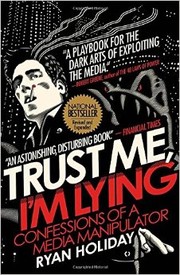
Trust Me, I'm Lying
Provides context on ethical and unethical online promotion, reinforcing the value of disclosure.
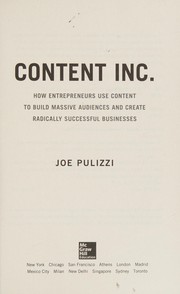
Content Inc
Focuses on sustainable audience-first publishing where trust and transparency matter.
Influence: The Psychology of Persuasion
Explains how persuasion affects trust, making transparent affiliate disclosures easier to understand.
eBay marketplace picks
Marketplace Samples
Live-tested eBay searches with available results related to this page.




Endnotes
1.
Source: asa.org.uk
Title: affiliate marketing
Link:https://www.asa.org.uk/advice-online/affiliate-marketing.html
Source snippet
Online Affiliate Marketing22 Mar 2023 — The Code also states that marketing communications must not falsely claim or imply that the ma...
2.
Source: ftc.gov
Title: You may also be liable if
Source snippet
Federal Trade CommissionFTC's Endorsement Guides: What People Are AskingSeptember 7, 2017 — 29 Jun 2023 — Advertisers shouldn't encourage...
Published: September 7, 2017
3.
Source: ftc.gov
Title: Federal Trade Commission Revised FTC Endorsement Guides
Link:https://www.ftc.gov/news-events/news/press-releases/2023/06/federal-trade-commission-announces-updated-advertising-guides-combat-deceptive-reviews-endorsements
Source snippet
Federal Trade CommissionRevised FTC Endorsement Guides...June 28, 2023 — 29 Jun 2023 — It adds specific guidance for influencers on when...
Published: June 28, 2023
4.
Source: GOV.UK
Title: Social media endorsements: guidance for content creators
Link:https://www.gov.uk/government/publications/social-media-endorsements-guidance-for-content-creators/social-media-endorsements-being-transparent-with-your-followers
Source snippet
January 23, 2019 — 3 Sept 2025 — If you use hidden ads or otherwise engage in misleading practices, you may be in breach of consumer prot...
Published: January 23, 2019
5.
Source: lexology.com
Link:https://www.lexology.com/library/detail.aspx?g=44cd35e4-7387-4c2e-bd32-f5eead573eb4
6.
Source: arxiv.org
Link:https://arxiv.org/abs/1809.00620
7.
Source: arxiv.org
Link:https://arxiv.org/abs/2603.04383
8.
Source: ftc.gov
Title: Federal Trade Commission FTC Report Shows Rise in Sophisticated Dark Patterns
Link:https://www.ftc.gov/news-events/news/press-releases/2022/09/ftc-report-shows-rise-sophisticated-dark-patterns-designed-trick-trap-consumers
9.
Source: oecd.org
Title: Dark commercial patterns (EN)
Link:https://www.oecd.org/content/dam/oecd/en/publications/reports/2022/10/dark-commercial-patterns_9f6169cd/44f5e846-en.pdf
10.
Source: ftc.gov
Title: releases advertising disclosures guidance online influencers
11.
Source: ftc.gov
Title: disclosures 101 new ftc resources social media influencers
Link:https://www.ftc.gov/business-guidance/blog/2019/11/disclosures-101-new-ftc-resources-social-media-influencers
12.
Source: ftc.gov
Title: final transcript 1
Link:https://www.ftc.gov/system/files/documents/public_events/171321/final_transcript_1.pdf
13.
Source: bulkorder.ftc.gov
Title: disclosures 101 social media influencers
14.
Source: ftc.gov
Link:https://www.ftc.gov/system/files/ftc_gov/pdf/p204500_endorsement_guides_in_2023.pdf
15.
Source: dsb.gov.au
Title: report patterns in the dark
Link:https://dsb.gov.au/sites/dsb.gov.au/files/2024-11/report-patterns-in-the-dark.pdf
16.
Source: lexology.com
Link:https://www.lexology.com/library/detail.aspx?g=e894b4b2-a4ae-4393-840b-2df72190621b
17.
Source: youtube.com
Link:https://www.youtube.com/watch?v=TpYEmQ9njyk
18.
Source: youtube.com
Link:https://www.youtube.com/watch?v=oQhn2MkCyK4
19.
Source: youtube.com
Link:https://www.youtube.com/watch?v=723U5nGxhTU
Source snippet
Disclosures 101 for Social Media Influencers: Ensuring FTC Compliance and Transparency...
20.
Source: youtube.com
Link:https://www.youtube.com/watch?v=HgsAPMRNeBU
Source snippet
What Legal Steps Do I Need to Take to Start an Affiliate Marketing Business?...
21.
Source: youtube.com
Title: What Legal Steps Do I Need to Take to Start an Affiliate Marketing Business?
Link:https://www.youtube.com/watch?v=x20kLwN2mTk
Source snippet
Where Do Affiliate Disclosures Go On A Blog?...
22.
Source: youtube.com
Title: Where Do Affiliate Disclosures Go On A Blog?
Link:https://www.youtube.com/watch?v=wjlxWzADg4o
Source snippet
"FTC" "affiliate disclosure" legal guide FTC Disclosures 101 for Social Media Influencers & Creators Justin Moore...
23.
Source: shopify.com
Title: affiliate disclosure
Link:https://www.shopify.com/blog/affiliate-disclosure
24.
Source: asa.org.uk
Title: get yourself affiliated with the rules on affiliate marketing
Link:https://www.asa.org.uk/news/get-yourself-affiliated-with-the-rules-on-affiliate-marketing.html
25.
Source: asa.org.uk
Title: recognising ads social media
Link:https://www.asa.org.uk/advice-online/recognising-ads-social-media.html
26.
Source: asa.org.uk
Link:https://www.asa.org.uk/static/uploaded/3af39c72-76e1-4a59-b2b47e81a034cd1d.pdf
27.
Source: iubenda.com
Title: affiliate disclosure
Link:https://www.iubenda.com/en/blog/affiliate-disclosure/
Additional References
28.
Source: ecfr.gov
Link:https://www.ecfr.gov/current/title-16/chapter-I/subchapter-B/part-255
29.
Source: researchgate.net
Link:https://www.researchgate.net/publication/401565188_Turning_Trust_to_Transactions_Tracking_Affiliate_Marketing_and_FTC_Compliance_in_YouTube%27s_Influencer_Economy
30.
Source: bakerbotts.com
Link:https://www.bakerbotts.com/thought-leadership/publications/2023/december/ftc-new-guidelines-for-endorsements-and-testimonials
31.
Source: trillion.com
Link:https://www.trillion.com/affiliate-transparency-clear-disclosures
32.
Source: coveringyourads.com
Link:https://www.coveringyourads.com/2020/02/articles/endorsements/influencer-social-media/
33.
Source: thebcma.info
Link:https://www.thebcma.info/onewebmedia/DOWNLOADABLE%20DOCUMENTS/BCMA%20Influencer%20Marketing%20Guidelines%20and%20Best%20Practice%20UK.pdf
34.
Source: maastrichtuniversity.nl
Link:https://www.maastrichtuniversity.nl/sites/default/files/2025-06/MWP%202025-4.pdf
35.
Source: ejlt.org
Link:https://ejlt.org/index.php/ejlt/article/download/990/1084/4299
36.
Source: cambridge.org
Link:https://www.cambridge.org/core/journals/behavioural-public-policy/article/dark-patterns-and-consumer-vulnerability/83EF6347CCB19EDA195C54229D34D3A8
37.
Source: slideshare.net
Link:https://www.slideshare.net/slideshow/disclosures-for-affiliate-links/79694916
Topic Tree
Follow this branch
Parent topic
Affiliate PagesRelated pages 29
- Amazon Is Amazon Associates Still Good for Beginners?
- Appliances What Kitchen Appliance Reviews Often Miss
- Authority Can Expertise Beat Bigger Affiliate Sites?
- Baby Travel Why Baby Travel Gear Reviews Need More Trust
- Business Tools Can Small Business Software Be a Better Affiliate Niche?
- +24 more in sidebar